Can Dogs Eat Blueberries? A Nutritionist's Honest Answer
A board-certified veterinary nutritionist breaks down whether blueberries are safe for dogs, how much to feed, and where their fiber and antioxidants actually help — and don't.
Yes, dogs can eat blueberries safely in small, measured amounts — real fiber and antioxidant value, not just a sweet treat.

On this page
My neighbor’s beagle mix, Otis, discovered the blueberry bush at the edge of a hiking trail last August and would not be moved. His owner stood there weighing the choice every dog owner eventually faces with a fruit or vegetable off the ground: pull him away entirely, or let him have a few and see what happens. She let him have a handful, watched him for the next hour, and he was fine — happier than fine, actually, trotting the rest of the trail with visible enthusiasm. That instinct to pause and weigh the tradeoff before deciding is exactly right, and it’s the same instinct I want every owner to bring to blueberries generally.
The short answer: yes, dogs can eat blueberries, and for most dogs they’re one of the more genuinely useful fruits you can offer, not just a novelty treat. They’re low in calories, carry real fiber, and bring a meaningful dose of antioxidants and vitamin C, according to PetMD’s breakdown of the fruit’s nutrition profile. They aren’t on the American Kennel Club’s list of foods to avoid, and unlike grapes or raisins, there’s no known toxic compound in the fruit itself. The caveats are about amount, preparation, and what you’re actually feeding — plain fresh or frozen berries, not the muffin.
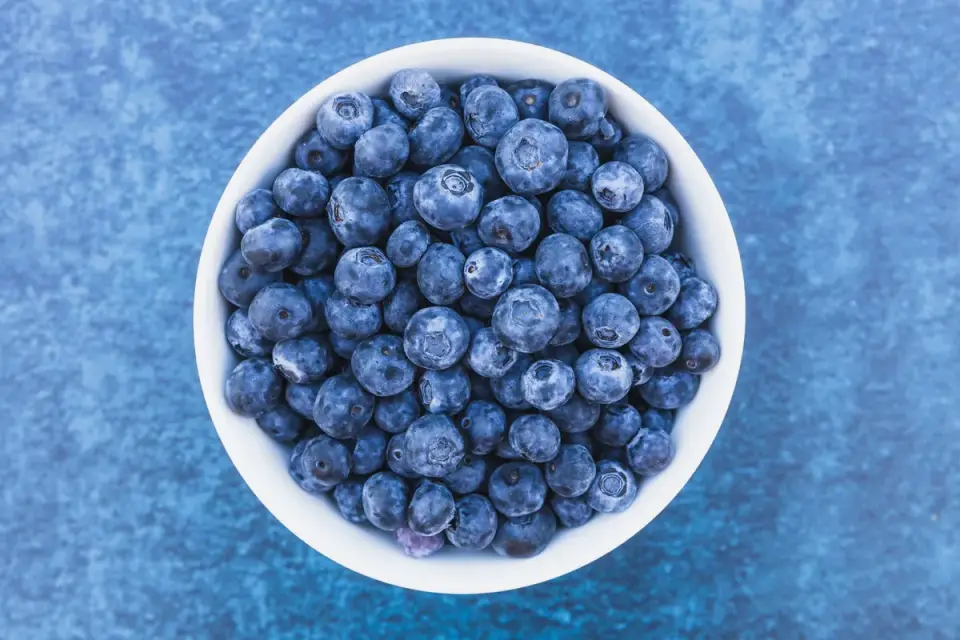
The Fiber and Antioxidant Case, Weighed Honestly
Here’s where I want to be careful, because it’s easy to overstate what a fruit does for a dog’s body. Blueberries’ fiber content is real and it does something: it can help support normal stool quality and give the gut microbiome substrate to work with, the same logic behind fiber-forward ingredients used across integrative veterinary nutrition. But individual response to fiber and prebiotic-style foods varies a great deal dog to dog. A recent Frontiers in Veterinary Science study on probiotic response in dogs found that “diversity metrics did not distinguish non-responders from responders” — a useful reminder that gut health interventions, food or supplement, don’t move every dog’s biology the same way. Antioxidants follow a similar pattern: plausible, evidence-supported at the level of nutritional science, but not something I’d promise will change a specific dog’s outcome.
Portion Sizes That Actually Make Sense
Start small and scale to size. A reasonable starting point is a couple of berries for a small dog, four to six for a medium dog, and up to eight or ten for a large dog, cut in half for anyone under about twenty pounds or any dog that inhales food without chewing. Keep total treats, blueberries included, under roughly ten percent of daily calories — that’s the standard veterinary guideline, and it holds for blueberries as much as anything else in the treat drawer. If it’s the first time, offer one or two and wait a few hours before offering more; loose stool from too much fiber too fast is the most common thing I hear about, and it’s avoidable.
Wash the berries first. Pesticide residue and dirt are a real, if minor, concern, and rinsing costs you nothing.

I think about this the same way I think about any owner standing in a kitchen weighing a dog’s begging eyes against a countertop bowl of fruit. A client once described feeding her senior spaniel blueberries during a slow evening walk break, one at a time from her palm, watching the dog’s gait and enthusiasm as much as she watched the berries disappear. That kind of attention — noticing energy, stool, appetite over the following day — matters more than any fixed number of berries. It’s diet as observation, not as a formula, and it’s the same mindset that should guide any change to a dog’s bowl, blueberries or otherwise.
Where Blueberries Can’t Do the Job
This is the part I want to be direct about, because it’s where I see owners occasionally reach for food as a substitute for treatment. Fiber-rich fruit is a reasonable everyday addition to a healthy dog’s diet, but it is not a management plan for a diagnosed digestive disorder. Exocrine pancreatic insufficiency is the clearest example: a recent review notes that “EPI is treated by pancreatic enzyme replacement therapy, nutritional management (low-residue diets with moderate fat content), and supplementation of cobalamin,” according to the Journal of the American Veterinary Medical Association. A dog with EPI needs that enzyme replacement and a carefully controlled diet — not a handful of berries hoping the fiber helps. The same review notes that “future studies are needed to further understand the causes of persistent dysbiosis in animals with EPI following initiation of pancreatic enzyme replacement therapy,” which is a fair summary of where the science actually stands: promising, still incomplete, and not a reason to skip a diagnosis. If your dog has ongoing digestive symptoms — weight loss, greasy stool, ravenous appetite without gain — that’s a veterinary visit, not a fruit bowl.
Reading the Label Before You Reach for the Fruit Bowl
Whole, fresh or frozen blueberries are the safe form. Blueberry muffins, pie filling, yogurt-covered berries, and trail mix blends are a different question entirely — added sugar, butter, chocolate, and occasionally xylitol can all be hiding in those products, and xylitol in particular is genuinely dangerous for dogs even in small amounts. If you’re building out a broader whole-dog routine around food and lifestyle first, our Whole-Dog Wellness starting guide walks through where these small diet choices fit into the bigger picture.
The Bottom Line
Blueberries earn their place in a dog’s diet on the merits: real fiber, real antioxidants, low calories, and no known toxin in the fruit itself. Feed them plain, in a portion sized to your dog, and treat them as a genuinely useful snack rather than a wellness shortcut — and if your dog’s digestion is already struggling, a vet visit will do more than any berry can.
Frequently asked questions
Can puppies eat blueberries?
Yes, in smaller portions than an adult dog. Cut or mash them first — a puppy's smaller airway makes whole berries a choking risk, and their digestive system tolerates new foods better in small test amounts.
Are frozen blueberries okay for dogs?
For most dogs, yes, though the firmer texture raises the choking risk for small breeds and fast eaters. If you freeze them as a warm-weather treat, mash them first for toy breeds.
Can dogs eat blueberry muffins or yogurt-covered blueberries?
Skip these. Processed blueberry products often carry added sugar, butter, or xylitol, an artificial sweetener that is genuinely dangerous for dogs — the fruit itself is the safe part, not what it's baked or coated into.
Sources
- Can Dogs Eat Blueberries? Are Blueberries Good For Dogs? — American Kennel Club
- Can Dogs Eat Blueberries? Benefits and Risks — PetMD
- Exocrine pancreatic insufficiency in dogs: review — Journal of the American Veterinary Medical Association
- Probiotic response and gut microbiome diversity in dogs — Frontiers in Veterinary Science