Can Dogs Eat Watermelon? A Vet Nutritionist's Guide to Doing It Right
Yes, dogs can eat watermelon in moderation — but the rind and seeds change the risk math. A veterinary nutritionist breaks down safe portions, what to skip, and why.
Yes, dogs can eat watermelon safely in small, seedless, rind-free portions as an occasional warm-weather treat.
On this page
My neighbor’s golden retriever, Biscuit, has a habit of parking herself under the picnic table the second anyone reaches for a knife and a watermelon. Last August I watched her owner debate, mid-slice, whether to toss her a chunk — rind still attached — because it was easier than trimming it first. That small hesitation is the whole question this article answers. Watermelon is not a risky food for dogs. Watermelon prepared carelessly is a different story, and the difference lives entirely in the parts most owners don’t think twice about: the rind and the seeds.
The Quick-Look Checklist Before You Slice
- Flesh: yes. Ripe, seedless (or de-seeded) watermelon flesh is fine as an occasional treat.
- Rind: no. Tough, fibrous, and hard to digest — skip it.
- Seeds: remove them. A few stray seeds are rarely an issue; a handful can clump.
- Portion: small. Treats, watermelon included, should stay under roughly 10% of daily calories, per Purina.
- Cut small. Cube or dice it — round chunks are a choking risk for small dogs.
- Skip anything processed. No canned watermelon, watermelon candy, or juice with added sugar.
- Check first if diabetic or overweight. Sugar content is modest per serving but adds up.
Each of those lines earns a section below, because a checklist without the reasoning behind it is just a rule someone will eventually break.
Why Watermelon Earns Its Place in the Bowl
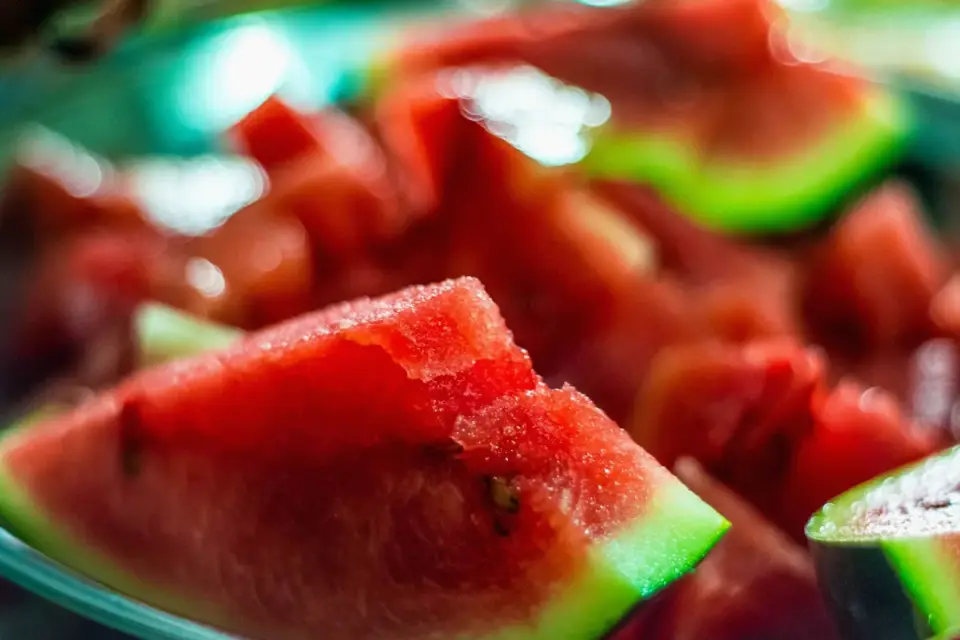
According to the American Kennel Club, watermelon is roughly 92% water and carries vitamins A, B6, and C along with potassium — real nutrition, not just novelty. That water content is the actual draw. On a genuinely hot day, a cold cube of watermelon does something a dry biscuit cannot: it hydrates while it rewards. I’d rather see a dog get a little extra moisture through food than skip a treat altogether during peak heat, and watermelon is one of the more useful ways to do that. It is not a substitute for a complete diet, and it should never be framed as one — it’s a garnish on the day, not a pillar of it.
The Rind and Seeds Are the Real Risk
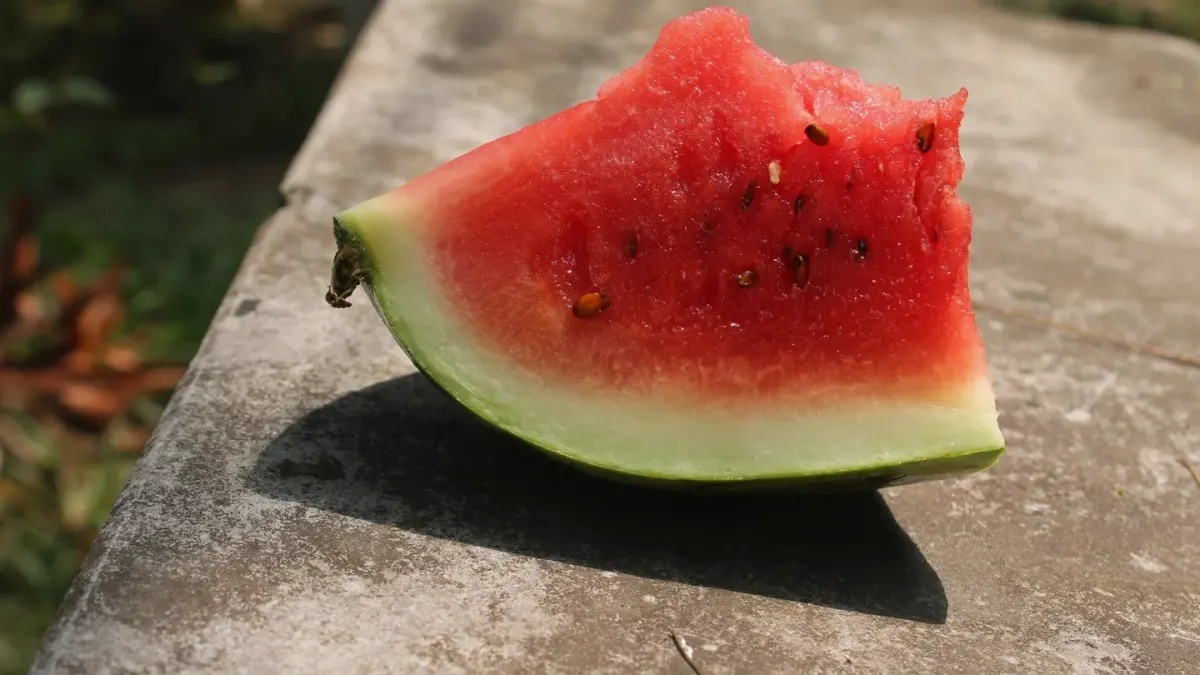
Here is where the checklist matters more than the marketing. The rind isn’t toxic in the way that grapes or xylitol are toxic — it’s a mechanical problem, not a chemical one. It’s dense, fibrous, and doesn’t break down easily in a dog’s gut. Swallowed in large pieces, it can cause vomiting, lethargy, or in more serious cases an intestinal obstruction that needs surgery, a risk PetMD flags directly. Seeds carry a similar, smaller version of the same risk: individually mostly harmless, but a mouthful can act like a plug rather than passing through. None of this means watermelon is dangerous. It means watermelon needs five extra seconds of prep before it hits the ground or the bowl.
When the Prep Gets Skipped
A short story, because this is where good intentions usually go sideways. Picture a backyard cookout in July — coolers open, kids running the hose, a half-eaten watermelon sweating on the table. Someone’s dog, a stocky beagle mix named Otis, spends the afternoon working the perimeter for drops. Nobody hands him a slice on purpose; the rind pieces just get left within reach as people finish their share and toss the ends toward a paper plate that misses. By evening Otis has quietly worked through several rind chunks nobody tracked, and the next morning he’s off his breakfast and hunched by the water bowl. That’s not a dramatic emergency, and most cases like it resolve with rest and a bland diet — but it’s also not nothing, and it’s entirely preventable. The lesson isn’t that watermelon is off-limits at a cookout. It’s that the rind needs a dedicated trash bag, not a paper plate, if there’s a dog working the yard.
How Much Is Actually Safe
Size and frequency matter more than most owners assume. A cup or two of cubed, seedless watermelon flesh is a reasonable treat for an average adult dog, offered occasionally rather than daily. Smaller dogs need proportionally smaller portions and smaller cuts — a round chunk that’s harmless for a Labrador can be a choking hazard for a dachshund. I’d rather an owner under-serve a new treat the first time and watch how the dog handles it than assume more is automatically better because the dog clearly wants more. Dogs are not reliable judges of their own moderation, and watermelon’s high water content means overdoing it can also mean loose stool the next day — an unpleasant but usually self-limiting outcome, not a medical emergency.

Where This Fits Into the Bigger Picture
Watermelon is a seasonal extra, not a diet strategy — the same logic that governs every other whole-food treat covered in Whole-Dog Wellness: A Practical Starting Guide. The everyday levers that actually move a dog’s health — a balanced complete diet, consistent exercise, and steady routine — do the heavy lifting. Treats like watermelon are a small, pleasant addition layered on top of that foundation, not a shortcut around it. If a dog’s stool, energy, or appetite consistently shift after fruit treats, that’s a conversation for your veterinarian, not a reason to guess at a fix.
The Bottom Line for This Weekend
Watermelon deserves its reputation as one of the more forgiving fruits to share with a dog — hydrating, low-calorie, and genuinely appreciated on a hot afternoon. The rind and seeds are the entire risk profile, and both are solved with a cutting board and a few extra seconds. Next time a dog parks itself under the picnic table, there’s no reason to hesitate over the knife — just make sure what lands in the bowl is flesh only, cut small, and offered like the treat it is rather than the meal it isn’t.
For related context, read Can Dogs Eat Onions? Yes, They’re Toxic — Here’s Why.
Frequently asked questions
Can dogs eat watermelon rind?
It's best avoided. The rind is fibrous and hard to break down, and swallowed pieces have been linked to gastrointestinal obstruction, according to the American Kennel Club.
Can dogs eat watermelon seeds?
Small numbers of seeds usually pass without incident, but a mouthful can clump and cause a blockage, especially in small-breed dogs. Seedless watermelon removes the guesswork entirely.
How much watermelon can a dog eat?
Treat-sized pieces, and treats overall — watermelon included — should stay under roughly 10% of daily calories, per Purina. A cup or two of cubed flesh is plenty for most adult dogs.
Is watermelon safe for dogs with diabetes?
Talk to your veterinarian first. Watermelon's sugar content is modest per serving, but dogs managing diabetes or weight often do better skipping fruit treats altogether.
Sources
- Can Dogs Eat Watermelon? Is Watermelon Safe for Dogs? — American Kennel Club
- Can Dogs Eat Watermelon? Benefits and Risks — PetMD
- Can Dogs Eat Watermelon? A Guide to Safety — Purina