What Panting in a Cool Room Means in Dog Body Language
A cool room rules out heat, so panting points to arousal, stress, or discomfort. Learn how to read the rest of the body and what to do next.
Panting in a cool room usually means arousal or unease, not heat, so read the whole body.
On this page
The living room was 68 degrees, windows cracked, ceiling fan on, and the four-year-old Beagle mix on the rug was still panting. Twenty-eight pounds, settled on her side after a short walk, tongue out and breathing fast with no play, no heat, no excitement to explain it. Her owner kept checking the thermostat, convinced the room felt warm to a dog in a fur coat. I asked her to watch the rest of the dog instead: ears slightly back, brow furrowed, lip licking between breaths, tail low and still. That cluster changed the question from temperature to tension.
How panting works when heat is not the trigger
Panting moves air quickly across the moist surfaces of the tongue, mouth, and upper airway. Evaporation carries heat away, which is why dogs rely on it during exercise or warm weather. The American Kennel Club describes panting as a normal cooling response, while also noting that heavy or out-of-context panting warrants attention to other causes.
The same rapid breathing pattern is wired into arousal. Sympathetic activation raises respiratory rate before any core temperature change. Think of it as preparation: heart rate climbs, muscles tense, breath quickens. In a cool room, that physiology is more informative because cooling demand is low. The behavior then points toward emotion, effort, discomfort, or pain rather than thermoregulation.
Baseline matters here. Some brachycephalic breeds and older dogs breathe louder at rest. What I prioritize is change from that dog’s normal resting pattern, not comparison to another dog.
What cool-room panting usually signals
Context does most of the sorting. A dog that pants while pacing, yawning, lip licking, turning away, or showing half-moon eyes is speaking stress or conflict. A dog that pants with a stiff body, fixed stare, and closed mouth between bursts may be holding high arousal near a trigger at the window or door. For owners sorting restlessness from distress, the contrast in Boredom vs Separation Anxiety: How to Tell the Difference is a useful next read.
Pain and medical causes sit in the same picture. Restlessness at night, panting after lying down, reluctance to settle, reduced appetite, or panting paired with limping, coughing, or vomiting shifts this from body language to a veterinary question. The VCA Hospitals overview of panting lists pain, anxiety, and underlying disease alongside heat, which matches how I counsel clients to triage.
Look at the mouth itself.
Reading the mouth, eyes, and posture together
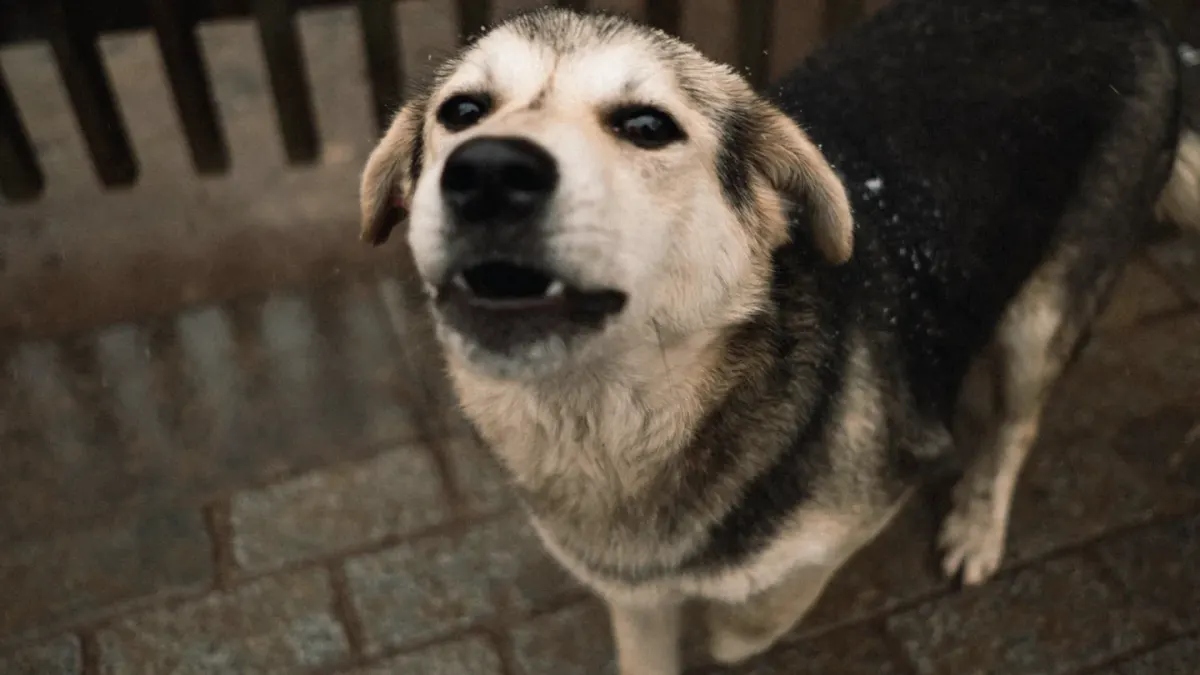
Stress panting often looks different from heat panting. The tongue may be long and flat or pulled back, the commissures of the lips pulled rearward, the panting uneven with pauses, yawns, drooling, or swallowing mixed in. Heat panting tends to look looser and more rhythmic, with a relaxed face and soft eyes.
Check the whole dog in this order: posture, tail, ears, eyes, then breath. A low crouch, tucked tail, weight shifted backward, and rapid glances toward an exit suggest fear. A forward lean, high tail, and intense focus suggest arousal toward something. Lying still but panting with whale eye and frequent position changes suggests discomfort rather than a mood.
A six-year-old, 62-pound Labrador taught me how easy it is to misread this step. Three weeks in after a move, he panted every evening on the same hallway rug, and the owners tried longer walks, then shorter walks, then a fan pointed directly at him. Nothing changed the breathing because the trigger was sound: a new elevator hum behind the wall that started at dinner time. Once we watched his ears track toward that wall before each panting bout, the plan shifted from exercise to management and gradual desensitization. Expectation first: calming routines may help support settling, but they do not erase a trigger you have not identified.
That failed approach is common. Adding activity to a worried dog often raises arousal further.
What to do in the moment and over the next two weeks
Start by lowering demand. Dim noise, create distance from visitors or window triggers, offer a familiar mat, and sit nearby without coaxing or correcting. Slow, quiet company tells you more than commands do. If panting eases within 10 to 20 minutes as the room stays calm, arousal or mild stress fits.
Track patterns for two weeks. Note time of day, what happened just before, how long panting lasted, and what else you saw. Video helps. Many owners discover a rhythm: departures, storms, garbage trucks, evening restlessness, or post-play panting that never quite settles. That log also helps your veterinarian separate behavior from medical causes, and it pairs well with notes on destructive chewing described in Is My Dog Chewing Out of Boredom or Anxiety?.
Be honest about calming aids. Herbal ingredients are often discussed for relaxation, yet for the remaining species, evidence is derived mainly from preclinical studies or traditional use, as summarized in Biomedicines. I treat that as thin support: routine, sleep, predictable departures, and low-stress handling carry the plan.
Call your veterinarian promptly for panting with pale or blue gums, labored effort, collapse, coughing, bloating, severe lethargy, or sudden behavior change.
The edge case I want owners to keep is the quiet older dog. A nine-year-old, 44-pound Border Collie mix I followed panted only after lying down in a cool bedroom, by day 10 most nights around 11 p.m., with no pacing and no noise sensitivity. Owners read it as anxiety because the room was calm. Radiographs later showed hip discomfort that hurt most when she folded into position. Cool-room panting had been effort and soreness, not emotion.
Where I land on cool-room panting
Treat it as information, not disobedience. Rule out heat, read the surrounding body language, track the pattern, and let medical causes be ruled out early rather than late. Most dogs do best when owners protect rest, keep departures boring, and reward calm settling on a consistent spot.
That steady baseline is what lets you see the next change clearly.
Frequently asked questions
Is panting ever normal in a cool room?
Yes, briefly after play, excitement, or dreaming. Persistent panting at rest in a cool room, especially with lip licking, yawning, pacing, or posture changes, points more toward stress, arousal, or discomfort.
How do I tell stress panting from heat panting?
Heat panting is usually loose, rhythmic, and matches warmth or exertion. Stress panting is often uneven, with a tense face, ears back, lip licking, yawning, or restlessness, and it occurs without a heat trigger.
When should I call the vet about panting?
Call promptly for labored breathing, pale or blue gums, collapse, coughing, bloating, vomiting, lethargy, limping, or any sudden change from baseline, even if the room feels cool.
Sources
- Why Do Dogs Pant? — American Kennel Club
- Chamomile, Anxiety and Stress Review — Biomedicines