Why Does My Dog Growl When I Pet Him? A Vet's Guide to Reading the Warning
A veterinarian explains the real reasons dogs growl during petting — pain, fear, and overstimulation — and what to actually do about it, starting today.
A growl during petting is your dog's clearest sentence yet — pain, fear, or one touch too many — and ignoring it is the real mistake.

On this page
The first time I saw it happen in my exam room, the owner looked more embarrassed than worried. Her dog, a nine-year-old terrier mix named Gus, had let her scratch his ears every night for years. Then one Tuesday, mid-scratch, he turned his head and growled — low, short, over in under a second. She apologized to him before she even looked at me. That reflex to apologize, to treat the growl as bad manners, is the single most common misunderstanding I see in practice, and it’s the reason I want to walk through this criterion by criterion instead of jumping straight to advice.
Start with the criteria, not the correction
Before you change anything about how you pet your dog, work through three questions in order: has anything changed physically, has anything changed environmentally, and has the touch itself changed. I ask owners to run this checklist in roughly that sequence because pain is the most commonly missed cause and the easiest one to fix once you find it.
1. Has something changed physically? Arthritis, ear infections, dental pain, and skin conditions are the top medical drivers of a new growl during touch, especially in dogs over seven. If the growl appears near a specific spot — hips, ears, tail base, a paw — treat that as a locator, not a coincidence.
2. Has the environment changed? A growl that shows up only when a stranger, a child, or another dog is nearby usually reflects fear or resource guarding rather than pain. Context matters as much as location.
3. Has the touch itself changed? Sudden, fast, or surprise contact — reaching over the head, waking a sleeping dog, petting from behind — triggers a startle-based growl even in dogs with no pain and no history of fear.

What I actually rule out first
In my practice, the exam always starts with hands, not a conversation about training. Gus turned out to have moderate hip arthritis that hadn’t shown up as limping yet — his owner hadn’t noticed because he still went on his usual walks, just a little slower on the second half. The growl only appeared when she scratched near the base of his tail and shifted his weight onto that hip. Once we started him on an NSAID trial and adjusted where and how she touched him, the growling stopped within about two weeks. I bring this case up constantly with owners of dogs age seven and older, because the instinct is almost always to assume the dog’s temperament changed. More often, the body did.
If a full physical and, when warranted, bloodwork or imaging come back clean, the growl is behavioral rather than medical — and that’s genuinely good news, because behavioral causes respond well to changes you can start making today.
The behavioral half: fear, overstimulation, and guarding
Once pain is off the table, three behavioral patterns account for most petting-related growls:
- Fear or under-socialization, often from a dog’s early history you may not fully know if he’s a rescue.
- Overstimulation, where petting that started pleasant tips into too much — a common pattern with long, vigorous scratching sessions.
- Resource or space guarding, where the growl appears specifically when the dog is on furniture, in a crate, or already resting.
None of these mean your dog dislikes you. A growl is communication, not defiance, and punishing it tends to suppress the warning while leaving the underlying discomfort intact — which is how you end up with a dog that bites without a growl at all next time.
What to do differently starting tonight
Here’s the plan I give owners in the room, and it doesn’t require special equipment. Pet in three-second increments and pause — if your dog leans in, continue; if he stiffens or turns away, stop. Avoid reaching over the head or waking a sleeping dog with a touch instead of a voice. Keep sessions to areas your dog has reliably enjoyed — chest, shoulders, base of the neck — until you’ve ruled out a sore spot elsewhere. And if the growling is new, book a veterinary exam before you book a trainer; treating pain that isn’t there does nothing, and training around pain that is there teaches your dog to stay quiet about something that still hurts.
For dogs where anxiety, not pain, appears to be the driver, structure/function ingredients are sometimes layered in alongside behavior work, never as a replacement for it. A review in Biomedicines notes that for chamomile, “for the remaining species, evidence is derived mainly from preclinical studies or traditional use,” which is a fair summary of where the animal evidence currently sits — promising in tradition, thin in controlled trials. Ashwagandha has a stronger human evidence base; a review in Cureus found that “a systematic review analyzed multiple RCTs and concluded that ashwagandha has a moderate positive impact on stress reduction and cognitive performance.” L-theanine’s human data is more mixed — a review in Molecular Psychiatry reported a meaningful effect “except for one study on psychotic anxiety (SMD = 0.54; 400 mg/day for 8 weeks),” a dose studied in people, not dogs. I mention these because owners ask, but I’m always clear that none of them substitute for an exam, and none of them are a shortcut around figuring out whether the growl started as pain.
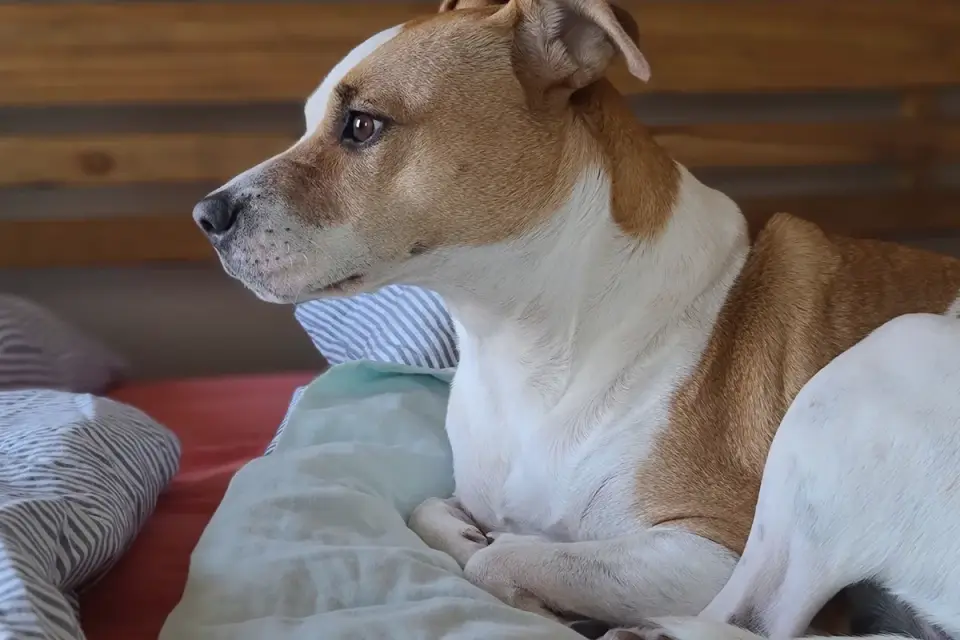
I still think about a client’s senior Lab, Maple, who’d started growling only when petted while lying on her orthopedic bed — never on the floor, never on the couch. It took a home visit to catch it: the bed’s raised bolster meant any touch near her shoulder pressed her weight unevenly onto an elbow with early arthritis. Once we swapped the bed and adjusted her joint-support plan, the growling on that spot disappeared entirely within days. It’s the kind of thing you only catch by asking where, not just when.
Where this lands
If your dog growls when you pet him, don’t treat it as a behavior problem to correct — treat it as a diagnostic clue to solve. Rule out pain first, every time, especially in a dog over seven or one with a sudden change in a previously reliable dog. If the exam is clean, the fix is usually gentler handling, shorter sessions, and rebuilding trust in the specific spots or situations that triggered the growl, not obedience training aimed at silencing him. For a broader look at building daily habits that support your dog’s whole health, our Whole-Dog Wellness: A Practical Starting Guide is a good next stop.
Frequently asked questions
Should I punish my dog for growling when I pet him?
No. A growl is a warning signal, not disobedience. Suppressing it with punishment can remove the warning while leaving the underlying pain or fear unresolved, which raises the risk of a bite with no notice next time.
Sources
- Chamomile in Anxiety and Stress: A Narrative Review — Biomedicines
- KSM-66 Ashwagandha and Stress: A Systematic Review of RCTs — Cureus
- L-Theanine and Anxiety: A Review of Clinical Evidence — Molecular Psychiatry