Controlled Leash Walking During Injury Recovery (Vet-Guided)
A vet-guided plan for controlled leash walking after injury — how to set pace, surface, and duration while supporting joints through diet and recovery.
Controlled leash walking lets an injured dog heal without losing the strength that recovery actually depends on.
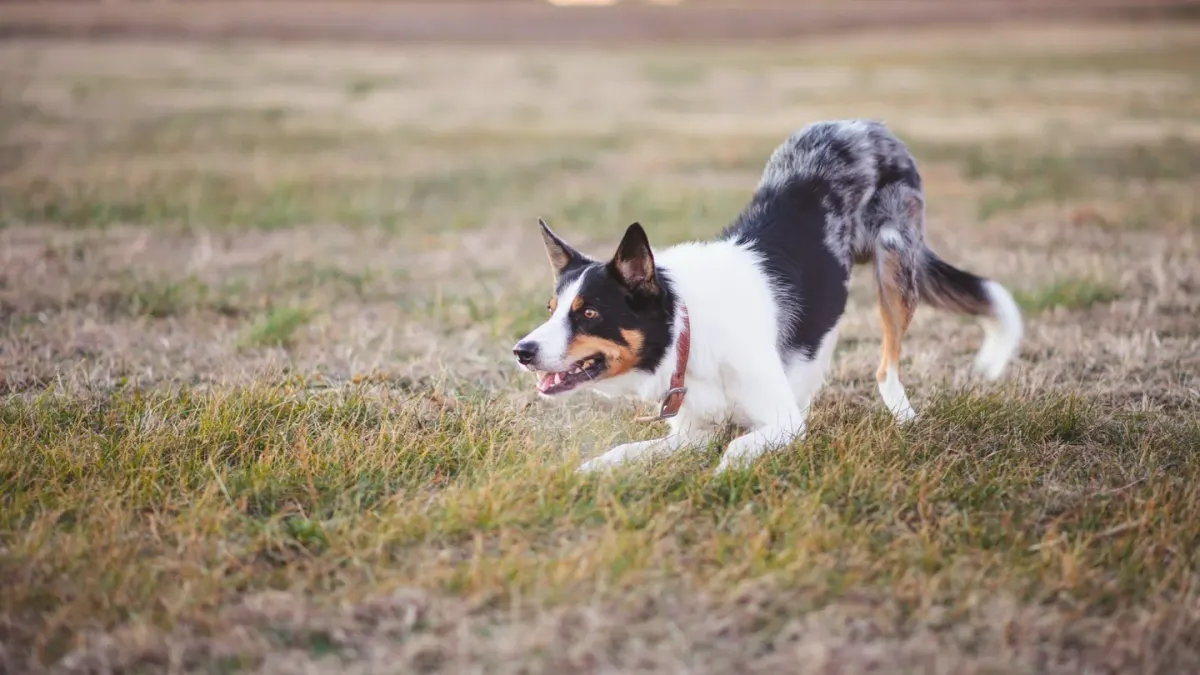
A seven-year-old, 68-pound Labrador mix stood at the exam room door two days after a hind-limb soft-tissue strain, tail thumping against the cabinet, ready to be a normal dog again while his owner held the leash tight with both hands and asked the question I hear constantly: how do I keep him quiet without letting him fall apart? By day 5 that tradeoff was already visible — stiffer rising in the morning, restless pacing at night, and that worried look owners get when rest feels like it is doing harm. I told them rest alone was not the plan. Movement, measured in minutes and feet rather than miles, was the plan.
That is the central decision in controlled leash walking for an injured dog. Total crate rest protects the injured tissue for a few days, but it costs muscle, joint range, gut regularity, and calm behavior within a week. Short, deliberate leash walks protect healing while preserving the rest of the dog.
When rest helps, and when it starts costing you
For most soft-tissue injuries, post-surgical recoveries, and mild lameness cases, veterinarians prescribe a period of strict rest followed by gradual return to movement, and the leash walk is how that transition happens safely. Think flat, predictable, and boring on purpose: same sidewalk, same pace, same side, no pulling toward other dogs, no stairs, no fetch on the way.
I weigh what a supplement can realistically do for diet, mobility, and recovery here the same way I weigh the walk itself. Food therapy and body condition do the heavy lifting for joint load, the walk preserves muscle and joint motion, and joint-support ingredients may help support the joint environment around that work — never in place of it.
The strongest counterargument is to keep the dog fully rested until the limp disappears completely. It sounds safer. In practice, waiting for zero lameness before moving often extends stiffness and muscle loss, which then overloads the healing leg once activity resumes. I still land on early, vet-cleared, controlled motion because disuse is its own injury.
The second week tells the story. A four-year-old, 42-pound border collie mix recovering from a forelimb sprain had been on crate rest with only yard potty breaks for ten days, and by day 10 the original limp looked slightly better but a new problem had appeared — she bunny-hopped up the two front steps she used to take cleanly, panted through the night, and pulled frantically on the one short leash trip to the mailbox. Her owner had followed rest perfectly, yet the dog was weaker and more frantic, not calmer. We replaced random yard time with two five-minute sidewalk walks per day, no sniff-and-lunge detours, and within four days her sleep settled before her gait fully normalized.
That failed approach is common. Owners either rest too completely and lose conditioning, or they interpret one good day as permission for a normal walk and re-injure the tissue.
How to build the walk back without guessing
Ask your veterinarian for three numbers before you start: minutes per walk, walks per day, and what lameness is acceptable during and after. Without those, owners almost always progress too fast.
In general, start shorter than you think you should. Five to ten minutes on flat, non-slick ground, at a true walk — dog at your side, leash short enough to prevent lunging, pace slow enough that the dog could sniff but not trot. Watch the last two minutes most closely. A dog that starts sound and shortens stride at minute eight told you the limit.
Progression is not daily. Hold the same walk for three to four days, then add only if the dog rises normally the next morning, shows no increase in lameness that evening, and does not need extra pain medication. That next-morning check matters more than how the walk looked.
Surface and equipment are part of the prescription. Grass or packed dirt beats slick floors and deep sand, gentle inclines wait until later in recovery, and a well-fitted harness with a fixed-length leash gives more control than a retractable leash. If you would normally run or cycle with your dog, this is not the time — save that load for full clearance.
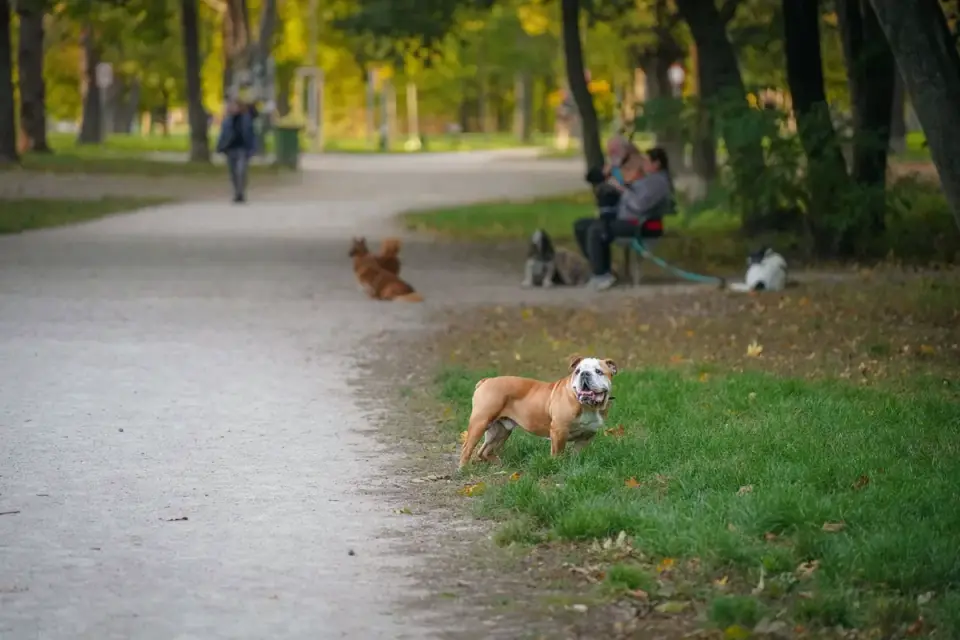
Pain signals end the walk, not the timer. Stop and call your veterinarian if you see toe-touching lameness that worsens, repeated lying down, swelling or heat, vocalizing, or a limp that is worse three hours later than when you started.
Dogs that cannot yet walk outside still need the routine. Mental work, slow weight-shifting exercises your rehab veterinarian approves, and brief leash stands for elimination keep the pattern without loading the injury.
Where diet and joint support fit around the work
Recovery raises the stakes on body condition. Every extra pound loads the healing limb on each step, so I prioritize a complete, balanced diet fed to maintain lean condition, adequate protein to support muscle retention during reduced activity, and omega-3s from food where appropriate. That nutritional foundation is grounded in nutritional evidence in a way no chew can replace.
Ground an integrative claim in the nutritional evidence and the picture gets clearer. Glucosamine and chondroitin are among the most studied joint support ingredients for dogs, and the research language stays modest for a reason. One line of work reports that chondroitin “supports healthy synovial fluid homeostasis” in work published in Frontiers in Veterinary Science, another notes that glucosamine “prevent experimentally induced cartilage degradation in vitro” as described in the Journal of Veterinary Medical Science, and green-lipped mussel research in rodents found that “BMO, GMO, and KO all alleviated paw swelling in rats and reduced serum levels of rheumatoid factor (RF), anti-cyclic citrullinated peptide (anti-CCP) antibody, and pro-inflammatory cytokines such as TNF-α and IL-17” according to Nutrients.
That evidence may help support whole-patient health alongside controlled loading, but it does not rebuild a ligament or replace progression discipline.
Recovery changes the question owners should ask.
The edge case that reframes everything is the older dog with more than one problem. A ten-year-old, 55-pound Australian shepherd three weeks in after a partial cruciate injury was doing perfect five-minute leash walks, yet she still struggled to rise after naps and lagged on the evening walk while the morning walk looked fine. The owner worried the injury was worsening. What had changed was not the knee — it was undiagnosed bilateral hip stiffness and evening fatigue unmasked by reduced activity. We kept the same controlled walking prescription, split it into three shorter outings instead of two, added non-slip rugs and a ramp for the car, and asked her veterinarian to reassess pain management for arthritis rather than pushing walk length. For multi-joint seniors, timing and frequency beat duration.
That is why I point owners toward comparisons like Swimming vs Walking for an Arthritic Dog: How to Choose (and When to Do Both) or Walking vs Running: Which Is Better for Your Dog only after the injury plan is clear. Cross-training can help later, but during recovery the controlled leash walk is the dose.
For dogs cleared for slightly longer outings, Fetch vs. Structured Walks: Which Exercise Actually Serves Your Dog Better? is a useful reminder of why I keep recovering dogs on structured walks, and When Is It Too Hot to Walk a Dog? A Vet’s Pavement Test and Timing Rules helps set safe timing as walks lengthen.
My verdict for most recovering dogs is plain: short, flat, frequent leash walks on a veterinary schedule, lean body condition, and modest joint nutrition to support the joint environment while motion does the real rehabilitation work.
Frequently asked questions
How long should a controlled leash walk be for an injured dog?
Only as long as your veterinarian prescribes — often 5 to 10 minutes on flat ground to start. Hold that level for several days and progress only if morning stiffness, lameness, and comfort the next day are unchanged.
Should I walk my dog if he is still limping a little?
Ask your veterinarian what level of lameness is acceptable for your case. As a rule, stop the walk for worsening lameness, repeated lying down, swelling or heat, vocalizing, or lameness that looks worse hours later.
Sources
- Chondroitin and synovial homeostasis in dogs — Frontiers in Veterinary Science
- Glucosamine and experimentally induced cartilage degradation — Journal of Veterinary Medical Science
- Marine oil blends, paw swelling and inflammatory markers in rats — Nutrients