Walking vs Running: Which Is Better for Your Dog
A vet weighs the physiology of walking versus running for dogs, when each makes sense, and how to protect joints if you run together.
Most dogs don't need to run at all, and the ones who benefit from it need to earn the mileage first.

On this page
Is walking or running the better exercise for a dog? The honest answer is that they aren’t interchangeable tools, and treating them as such is where I see owners get into trouble.
I remember a three-year-old Vizsla named Copper whose owner had started training for a half-marathon and brought him along for every run, five days a week, building from two miles to seven over about six weeks. Copper is a breed built for stamina, so on paper he should have handled it. Instead, by week five he was hopping on his right rear leg after the first mile and reluctant to jump into the car — a dog who used to launch into the back seat without hesitation. Nothing showed up dramatically on exam; it was a mild soft-tissue strain from a training load that outpaced his conditioning, not his breed potential. He needed six weeks of walk-only recovery before easing back into short runs. The lesson wasn’t that running is bad for Vizslas. It’s that running load has to be built the way you’d build it for a person: gradually, with rest days, and with attention to how the dog moves the next morning, not just during the run itself.
What walking and running actually ask of a dog’s body
Walking is a low-impact, weight-bearing gait. At a walk, a dog almost always has at least one paw on the ground, which spreads force across the stride and keeps peak joint loading relatively modest. It’s also aerobically mild enough that most healthy adult dogs can sustain it for long periods without much cardiovascular strain, which is part of why it remains the default recommendation for daily movement, mental stimulation, and weight management.
Running changes the mechanics substantially. At a trot or gallop there’s a suspension phase where all four paws leave the ground, and landing forces are absorbed through fewer points of contact at higher velocity. That’s a heavier repetitive load on cartilage, tendons, and the growth plates in young dogs, and it raises heart rate and respiratory demand well above walking pace. None of that makes running harmful by default — many dogs are built for it and thrive on it — but it does mean the tissue has to be conditioned to handle repetitive impact, the same way a runner builds up mileage instead of jumping straight to ten miles.
Which dogs are reasonable candidates for running
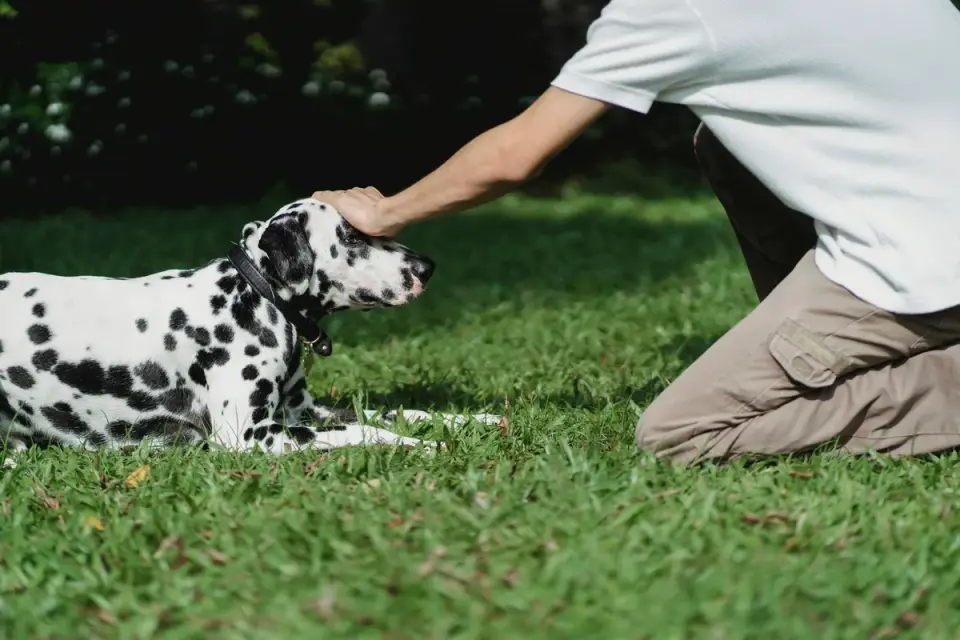
Breed build matters more than enthusiasm. Long-backed or brachycephalic dogs — Dachshunds, French Bulldogs, Pugs — are generally poor running candidates: the first because of spinal loading risk, the second and third because their airway anatomy limits how much oxygen they can move at speed, especially in heat. Deep-chested working and sporting breeds like Vizslas, Labradors, and herding dogs tolerate running better structurally, but “better structurally” still isn’t “ready on day one.” Puppies are a separate issue entirely: growth plates in the long bones haven’t closed, and repetitive high-impact running before they do is a real risk factor for orthopedic problems later. Most large-breed puppies shouldn’t be doing structured runs until closer to 12–18 months, and even then the buildup should be gradual.
Age at the other end of life matters just as much. A dog with diagnosed or suspected osteoarthritis is a walking-only case in almost every circumstance I encounter, because the joint simply can’t tolerate impact loading without paying for it in stiffness and soreness afterward.
Where joint-support ingredients fit into that picture — and where they don’t
Owners of active or aging dogs often ask whether a joint supplement can offset the wear from running, and I want to be precise about what the evidence actually supports rather than what’s convenient to claim. Chondroitin and glucosamine are among the most studied joint-support ingredients for dogs, and chondroitin specifically has evidence supporting healthy synovial fluid homeostasis, according to a 2026 review in Frontiers in Veterinary Science. Glucosamine HCl has been shown, per a review published in the Journal of the Veterinary Medical Science, to help prevent experimentally induced cartilage degradation in vitro — laboratory evidence, not a guarantee of outcome in a running dog. Green-lipped mussel powder has separate supporting data: research in Nutrients found that mussel-derived compounds alleviated paw swelling in rats and reduced markers of inflammation including TNF-α and IL-17.
That’s a real evidence base, and it’s why joint-support ingredients show up so often in conversations about active dogs. But I’ll be direct about what they can’t do: none of that research turns high-impact running into a low-impact activity, and no ingredient replaces a gradual conditioning plan. What a supplement can realistically do is support the joint environment alongside good training habits — it isn’t a substitute for building mileage slowly, choosing surfaces thoughtfully, or recognizing when a dog’s structure simply isn’t suited to running at all. I’d rather see an owner nail the conditioning basics from how long a dog’s walk should be than lean on a supplement to paper over a training program that’s moving too fast.
Building a running habit without wrecking the dog you started with
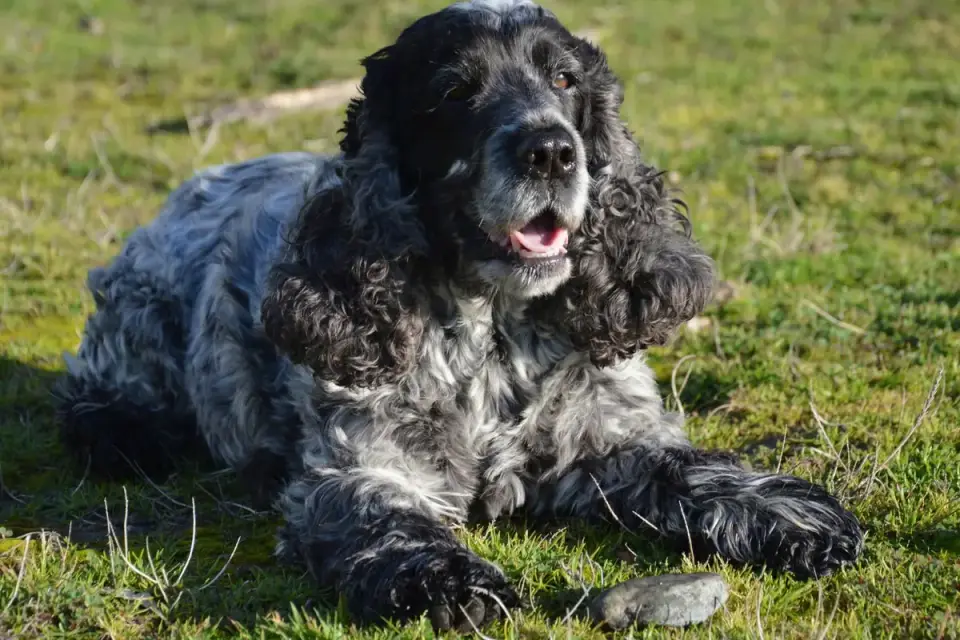
If a dog is structurally suited to running, the safest path looks a lot like a human couch-to-5K program: start with walk-run intervals, add distance in small increments over weeks rather than days, and watch how the dog moves the next morning, not just during the activity. Stiffness after rest, reluctance to jump, or a subtle limp that resolves within a lap are all signs the load outpaced conditioning. Heat matters just as much as distance — a dog that’s fine on a 6 a.m. run in April can overheat on the same route by July, which is worth checking against pavement and timing guidance before assuming yesterday’s route is safe today.
I think about a Border Collie mix I worked with a few years back, a lean seven-year-old named Scout whose owner ran with her three mornings a week on a wooded trail. Scout had always kept pace easily, but one October the owner noticed she was slower to get up from lying down and had started avoiding the porch steps she used to take without a second thought. We didn’t change her diet or add anything dramatic — we cut her runs back to two shorter ones a week, added a rest day between them, and kept the rest of her exercise to walking. Within about three weeks she was taking the steps normally again. It wasn’t a mystery injury; it was a dog whose joints were quietly telling her owner the volume needed to come down, and the owner listened before it became something bigger.
The bottom line
Walking is the right default for essentially every dog, every day, regardless of age or breed. Running is a legitimate addition for structurally suited, well-conditioned adult dogs, but it’s an addition you build toward, not a baseline you assume. If you’re unsure where your dog falls, start with consistent walking — using something like the guide to daily walk length as your baseline — and only layer in running once your dog is handling that easily and your vet has no orthopedic concerns on exam. For a broader framework on where exercise fits alongside diet and daily routine, the Whole-Dog Wellness starting guide is a reasonable place to begin.
Frequently asked questions
Can a dog switch straight from walking to running with no transition?
Not safely. Tendons, ligaments, and cartilage need weeks of gradually increasing load to adapt to the impact of running; jumping straight to regular runs is a common cause of soft-tissue strain.
Is running ever appropriate for a dog with early joint changes?
Generally no — low-impact activity like walking or swimming is the safer choice once osteoarthritis or joint changes are suspected, and any exercise change should go through your veterinarian first.
Sources
- Protective effects of turmerosaccharides rich extract of Curcuma longa L. in osteoarthritic dogs — Frontiers in Veterinary Science
- Glucosamine HCl and cartilage degradation — Journal of the Veterinary Medical Science
- Green-lipped mussel compounds and inflammatory markers — Nutrients