How to Introduce a New Food or Topper Without Wrecking Your Dog's Gut
A board-certified veterinary neurologist's step-by-step, week-by-week plan for switching a dog's diet or adding a topper without triggering vomiting, loose stool, or food refusal.
Here's how to introduce new food to a dog the way I tell clients: slow, structured, and watched closely for the first week.
On this page
A Labrador named Otto taught me most of what I know about diet transitions gone wrong. He was nine, sixty-one pounds, and his owner had switched him cold-turkey from a chicken kibble to a salmon-and-sweet-potato formula on a Friday night because the bag ran out. By Sunday morning he was hunched over the water bowl in the kitchen, refusing breakfast, with stool the consistency of pudding on the back patio. Nothing was structurally wrong with the new food. The problem was the speed. In my practice I see this pattern several times a month, almost always framed the same way: “he did fine on the old food, so I figured the new one would be fine too.” That’s not how a gut microbiome works, and it’s not how I’d want my own dog’s digestion tested.
Why the gut needs a runway, not a cliff
Your dog’s intestinal tract hosts a population of bacteria that’s tuned to whatever he’s been eating for weeks or months. Change the fiber type, fat percentage, or protein source overnight and you’re asking that population to shift composition faster than it reasonably can. The result is the classic transition trio: loose stool, gas, and a day or two of picking at the bowl. This isn’t a disease process in a healthy dog — it’s a predictable adjustment period, and it’s avoidable with a slower runway.
Dogs with an already-compromised digestive tract need even more caution. In exocrine pancreatic insufficiency, for example, the standard of care combines enzyme replacement with deliberate nutritional management — specifically Journal of the American Veterinary Medical Association: low-residue diets with moderate fat content, paired with cobalamin supplementation. That’s a clinical case, not a topper swap, but it underscores the same principle at a smaller scale: the diet itself is treated as part of the intervention, not an afterthought to it.
Week one: the 25/75 start
Day one through day three, mix roughly 25% new food with 75% of the old. Watch the stool in the yard or on the walk — firm, formed, and easy to pick up is your green light to keep going. If you see soft stool or a skipped meal, hold at that ratio for another two days before advancing. Don’t rush this step because the bag says “gradual transition over 7 days” on the back panel; every dog’s gut moves at its own pace, and a sensitive dog may need ten to fourteen days instead of seven.
Feed at the same times you normally would. Consistency in timing matters almost as much as the ratio itself, because a dog’s digestive rhythm — motility, enzyme release, appetite — runs on a schedule your household has already trained into him.
Midweek: watching for the real red flags
By days four through six, you’re typically at 50/50. This is the window where I ask owners to actually look at what’s landing in the yard rather than assume things are fine because the dog is still eating. Formed stool with normal color is expected. Repeated vomiting, blood in the stool, lethargy, or a dog who won’t eat at all for more than 24 hours are not “adjustment” — those warrant a call to your veterinarian rather than pushing forward with the transition.
I worked with a twelve-year-old dachshund a few winters back whose owner had added a raw goat’s-milk topper on top of a food switch, doubling the variables at once. The dog was straining in the yard within two days, hunched and uncomfortable on a cold porch step, and stopped jumping onto the couch that same week — a mobility clue that told me she was guarding a sore abdomen, not just adjusting to new food. We backed off to the old diet alone, let her stabilize for five days, then reintroduced the new food by itself, one variable at a time. Within ten days her stool was normal and the couch-jumping was back. The lesson wasn’t about the goat’s milk or the new food specifically — it was about never changing two things at once when you’re trying to read a gut’s response.
Toppers deserve their own slow start
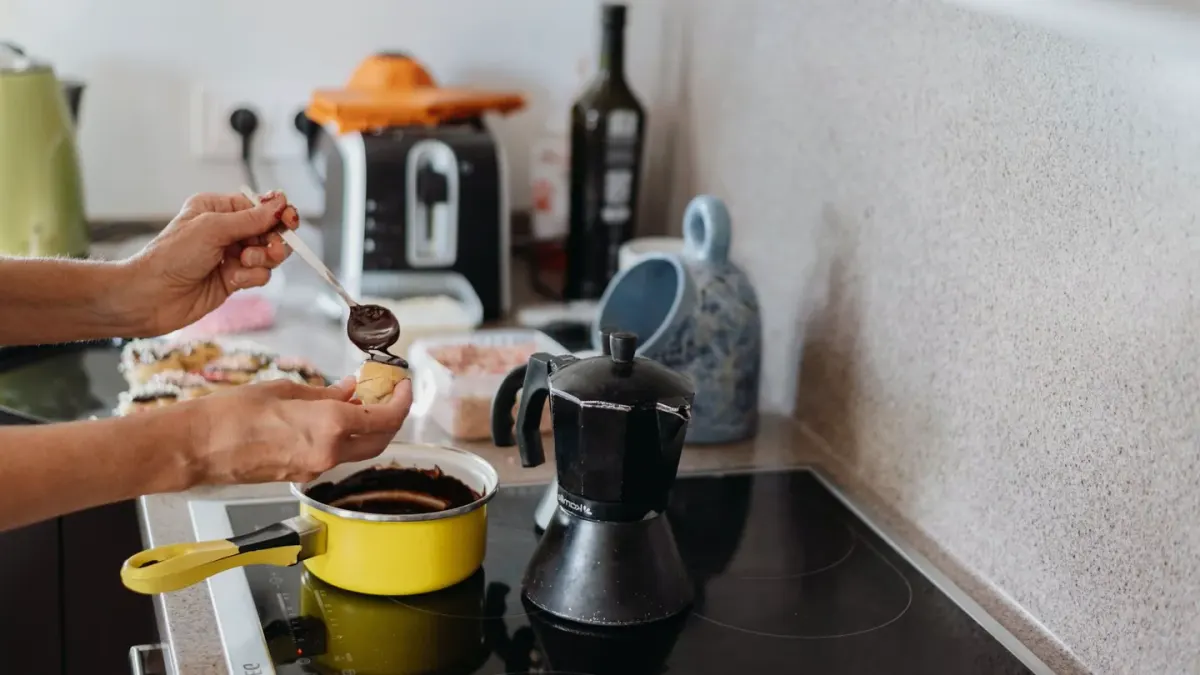
A topper — bone broth, pumpkin, a fresh-food mix-in — isn’t exempt from this logic just because it’s “just a spoonful.” Fiber-forward add-ins like pumpkin work because they supply gentle, natural fiber; that’s a texture and motility effect, not a magic fix, and it still needs to be introduced gradually rather than dumped in at a full serving on day one. Start with a teaspoon for a small dog or a tablespoon for a large one, hold for two to three days, and increase only if stool stays normal.
If you’re rotating between novel ingredients as toppers — apple, banana, blueberries — introduce them one at a time, several days apart, not as a mixed fruit salad on day one. That’s the only way to know which ingredient, if any, is the one your dog doesn’t tolerate well. Our guides on whether apples are safe for dogs, bananas as an occasional topper, and blueberries in moderation each walk through appropriate portions by life stage, which matters more here than most owners expect — a senior dog’s tolerance for a new fiber source is not the same as a puppy’s.
When probiotics actually help the transition
Some owners ask whether adding a probiotic during a diet switch smooths things out. The honest answer from the research is mixed. A recent randomized trial in dogs looked at probiotic response and found that Frontiers in Veterinary Science: diversity metrics did not distinguish non-responders from responders — meaning a dog’s baseline microbial diversity didn’t reliably predict who’d benefit. That’s not a reason to avoid probiotics during a transition, but it is a reason not to treat one as a guaranteed fix. If you’re using one, layer it into the same slow ratio schedule rather than adding it as a second simultaneous variable.
What I tell owners weighing a fast switch against a slow one
The owners I see most often are choosing between two pressures: a food that’s back-ordered and running out by Thursday, or a topper their dog seems bored of and won’t touch. Both are real constraints, and neither one is a good reason to skip the 7-to-14-day window. If you’re truly out of the old food, buy a small bag of a similar formula — same protein, similar fat percentage — to bridge the gap rather than jumping straight to the new long-term diet cold. It’s a bit more effort up front. It saves you a week of cleanup and a worried dog.
Watch appetite as closely as stool. A dog who’s eating eagerly but producing soft stool is usually just adjusting. A dog who’s refusing food and producing soft stool, especially past 48 hours, needs a veterinary check rather than more patience. Onions and other genuinely toxic ingredients are a different category entirely from a normal transition upset — if you suspect an ingredient exposure rather than a transition reaction, our guide on why onions are toxic to dogs explains what that picture actually looks like, and it doesn’t resemble ordinary diet-switch stool.
Where this actually lands
Otto’s owner and I settled on a ten-day transition the second time around, moving in 20% increments instead of jumping straight to 50/50. No vomiting, no skipped meals, stool back to normal by day six. That’s one dog, not a study, but it’s the pattern I’ve watched repeat across a couple of decades of practice: slow beats fast almost every time, and the “just switch it” instinct is usually driven by convenience rather than anything the dog’s gut is asking for. If your dog has an existing GI condition, is a senior, or is on any prescription diet, loop your veterinarian in before you start rather than after the stool changes. Everyone else can follow the ratio schedule above and watch the yard for their answer.
What would actually change if you gave the transition three extra days instead of rushing it into one?
Frequently asked questions
How many days should I take to switch my dog's food?
Most healthy adult dogs do well with a 7-to-10 day transition, moving through roughly 25%, 50%, 75%, then 100% new food. Sensitive dogs or seniors may need 10-14 days.
Is loose stool during a food switch normal?
Mild softening for a day or two is common as the gut adjusts. Persistent diarrhea, vomiting, blood in the stool, or refusal to eat past 24-48 hours is not normal and warrants a veterinary call.
Can I add a topper at the same time as switching foods?
Better not to. Introduce one variable at a time — finish the food transition, then add the topper gradually a few days later — so you can tell which change, if any, caused a reaction.
Sources
- Diagnosis and management of exocrine pancreatic insufficiency in dogs and cats — Journal of the American Veterinary Medical Association
- Probiotic response and gut microbial diversity in dogs — Frontiers in Veterinary Science