How to Stop a Dog That Jumps on Visitors
A practical, preventive guide to calm greetings — why dogs jump, how to set up the doorway, and what to reward instead.
To stop your dog jumping on visitors, reward calm greetings and manage the doorway until the habit sticks.
On this page
The doorbell rings and your dog is already airborne. You apologize, grab the collar, and promise your guest he is friendly. He is friendly. That is exactly the problem.
I counsel owners to set the expectation first: jumping is not dominance or defiance, it is a greeting strategy that has worked. Dogs repeat what earns attention, even if that attention is pushing, yelling, or laughing. If we want a different greeting, we have to make calm behavior pay better, and we need about three to six weeks of consistent practice to see it hold. That timeline matters more than any single technique.
Last spring I worked through this with an owner and her 3-year-old, 68-pound Labrador mix who lived for visitors. The second he heard footsteps on the porch he would sprint, plant both paws on chests, and wag so hard his whole back end swung. By day 10 of keeping him behind a baby gate with a stuffed Kong until guests were seated, the barking dropped and he started offering a sit without being asked. The number did not fix him, but it gave the owner proof the arousal curve could change.
Why jumping keeps paying off
Think of it from baseline behavior. Your dog wants proximity, your visitor looks, talks, touches, or backs away. All of that is reinforcement. Even a knee up or a shouted off can keep an excitable dog in the game. The ASPCA explains this same learning loop in its guidance on jumping up, and it recommends teaching an incompatible behavior rather than trying to punish the jump away.
My position is simple. Prevention plus one well-rehearsed alternative beats correction every time. The strongest counterargument is that a sharp correction stops the jump faster in the moment. It can. But it does not teach what to do instead, and it often raises arousal or anxiety at the doorway, which makes the next greeting harder.
Set the doorway up before you need it
Management is not cheating. It is preventive care for behavior.
Keep a leash by the door, a baby gate or exercise pen to create a greeting zone, and a mat or bed a few feet back. Exercise before expected guests helps too. A tired dog is not a trained dog, but a dog that has had a walk and sniff time starts at a lower arousal baseline.
This pairs well with the same doorway routine I recommend for dogs that crowd the threshold in How to Stop Your Dog From Bolting Out the Front Door. You are building a habit: door sounds predict settle, not sprint.
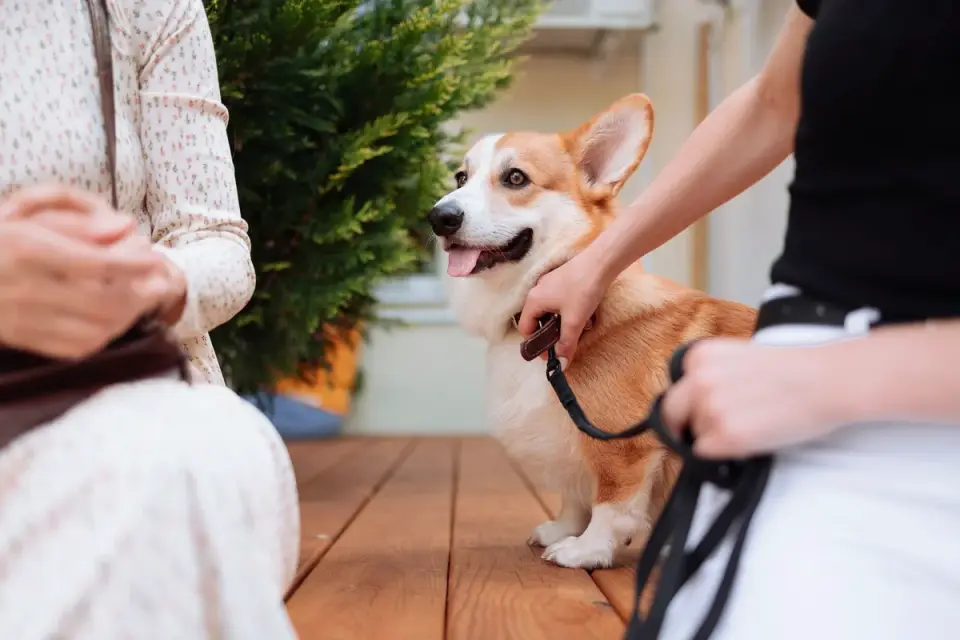
She tried what many owners try. With her 18-month-old, 42-pound cattle dog mix, she had her brother walk in five times in a row while she said off and pulled the dog down by the front legs. Three weeks in, the dog was jumping higher and mouthing sleeves on the way down. The failed loop was clear on video: the brother made eye contact, reached out, then turned away, all while the dog was still over threshold. Once we added a leash tether to a heavy table and asked the brother to only greet after four paws stayed down for five seconds, the mouthing faded because the dog finally understood the criteria.
Teach one greeting that earns attention
Pick one behavior your dog can hold when excited. Sit for greeting works for most dogs. Place on a mat works better for persistent jumpers because it adds distance.
Practice without visitors first. Reward in place, release, repeat. Then add a helper who can follow instructions. Ask your helper to approach only when all four paws are down, step back if paws lift, and pet low on the chest once the dog holds position. Keep sessions short, two to three minutes, and end while your dog is still successful.
Keep handling low-stress. If your pup also gets mouthy when excited, use the same redirection and rest principles in How to Stop Puppy Biting and Mouthing. Calm mouths and calm paws tend to improve together.
Training works best when the whole household follows the same rule.
Where calm support fits and where it does not
Diet, sleep, daily exercise, and predictable greetings move this behavior most. Some owners ask about chamomile, valerian, L-theanine, or ashwagandha chews for doorbell excitement. Chamomile and Valerian Root have been used in traditional herbal care to support relaxation, and that history is worth naming honestly.
The limit is evidence in dogs. As noted in a review in Biomedicines, “For the remaining species, evidence is derived mainly from preclinical studies or traditional use.” That is why I place these products in the may help support category, not the fix category. For training philosophy overall, I lean on the humane hierarchy described by the American Veterinary Society of Animal Behavior, which favors reinforcing desired behavior first.
An edge case changed how I explain this to sensitive dogs. A 7-year-old, 24-pound terrier mix was perfect with familiar guests but launched at repair workers with boots and tool bags. By day 14 we realized it was not just excitement, it was startle plus novelty. We moved her mat farther from the door, gave her a lick mat before appointments, and asked workers to toss a treat behind her rather than reach over her. Her greeting did not become social, but it became safe and predictable, which was the right goal for her.
What I would do starting tonight
Put the gate up, leash ready, treats by the door. Tell guests the plan before they arrive: no greeting until your dog is settled, then calm petting only. Reward four on the floor or a mat settle every single time. If paws lift, the guest steps back quietly and you reset. No yelling, no kneeing, no long lecture.
Expect messy first outings. Progress looks like shorter jumps, quicker recoveries, and more offered sits, not instant perfection.
Frequently asked questions
Should I knee my dog or yell when he jumps on visitors?
I would skip it. Physical corrections and yelling often add excitement or stress at the door and do not teach what to do instead. Manage the space with a gate or leash and reward four paws down or a mat settle.
How long does it take to stop jumping?
Most households see steadier greetings in three to six weeks with consistent practice, though excitable adolescents and dogs with limited guest exposure may need longer. Track recovery time, not perfection.
What should guests do when my dog jumps?
Ask them to turn slightly, step back, and withhold petting until your dog is settled. Then they can pet calmly and low. Brief your guests before they walk in so everyone follows the same rule.
Sources
- Position Statements — American Veterinary Society of Animal Behavior
- Wild Flora Species from Romania with Anxiolytic and Antidepressant Potential: A Global Perspective—Narrative Review — Biomedicines