Why Does My Dog Hump Other Dogs at the Park?
A vet explains why dogs mount other dogs at the park, when it's normal play or stress, and what to actually do about it in the moment.
Most park humping isn't dominance or misbehavior — it's your dog's nervous system spilling over, and the fix starts with reading the room, not scolding the dog.
On this page
- What’s actually happening when a dog mounts at the park
- Reading the arousal, not just the behavior
- Play-driven mounting versus stress-driven mounting
- A pattern I see more than owners expect
- What to actually do in the moment
- Where diet, exercise, and daily structure fit in
- When it’s worth a second look
- Where I land
The first time an owner described it to me, she was almost apologetic. Her dog, a two-year-old Goldendoodle named Baxter, had bolted across the park the second the gate opened, made a beeline for a Border Collie he’d never met, and mounted him within thirty seconds. No growling, no warning signs, just — up and on. She wanted to know if he was being dominant, if he was “sexually confused” since he’d been neutered at six months, or if something was wrong with him. None of those. What I told her is what I tell most owners who bring me this exact scene: watch what happens in the ten seconds before the humping starts, not the ten seconds after. That’s where the real answer usually lives.
What’s actually happening when a dog mounts at the park
Mounting looks like one behavior, but it comes from a handful of different internal states, and telling them apart is most of the work. According to PetMD, the behavior is more often linked to play, excitement, or stress than to sex or rank — the old idea that a humping dog is trying to “dominate” the other dog has been dropped by most behaviorists who actually study this. A dog who’s overjoyed to see a playmate can mount as an overflow valve for that excitement. A dog who’s mildly overwhelmed — too many new dogs, too much noise, a fence line he can’t get away from — can mount as what’s called a displacement behavior, an out-of-context release for an emotional state he doesn’t have another outlet for. UC Davis School of Veterinary Medicine: UC Davis’s veterinary behavior service notes that mounting toward other animals is typically driven by arousal, anxiety, or play rather than any single tidy explanation, which is exactly why two dogs doing the identical physical behavior can need two completely different responses from you.
Reading the arousal, not just the behavior
Here’s the piece most owners skip: mounting is rarely the first sign of anything. It’s usually the third or fourth sign, arriving after a dog has already climbed several rungs up the arousal ladder — faster panting, tighter body, a fixed stare, maybe some vocalizing — and simply run out of other places to put that energy. If you only watch for the humping itself, you’ll always be a step behind. If you watch the dog’s baseline instead — is he loose and bouncy, or is he coiled and staring before he ever makes contact — you get a much earlier, much more useful signal. I ask owners to narrate what their dog’s body is doing in the thirty seconds before the behavior starts. Most can’t, at first. By the second or third visit, they usually can, and that’s when the management gets easier.
Play-driven mounting versus stress-driven mounting
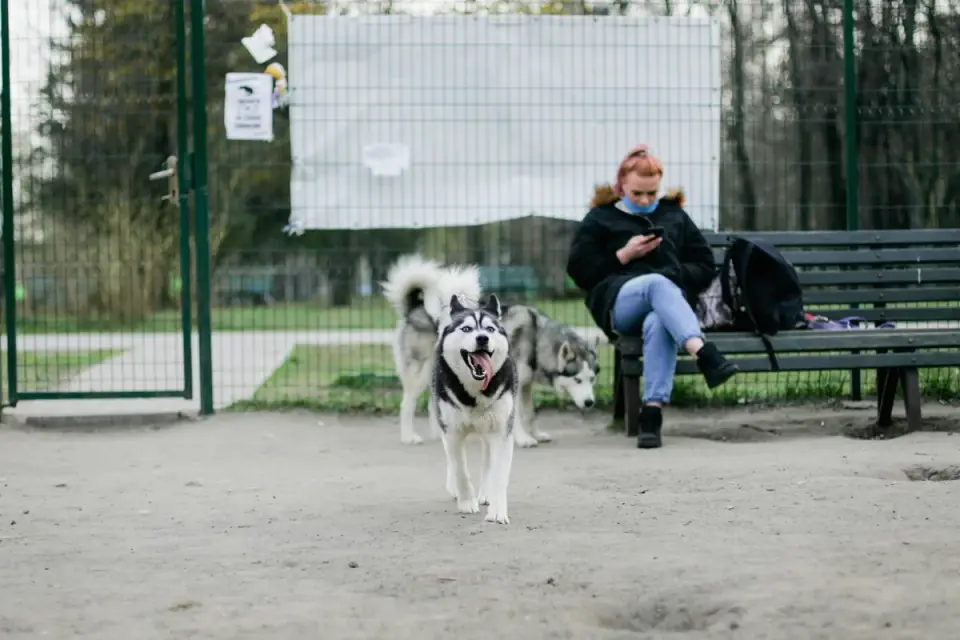
Play-based mounting tends to be loose and reciprocal — the dogs trade roles, there are play bows and pauses, and the “humped” dog often shakes it off and re-engages a minute later like nothing happened. Preventive Vet frames a lot of this as normal social behavior between dogs who know each other and are comfortable, which matches what I see most weekends: one dog mounts, gets shrugged off, and both go right back to chasing a ball. Stress-driven mounting looks different up close. It’s often directed at a dog the humper barely knows, it happens fast and repeatedly, the humper’s body is stiffer, and — this is the tell I trust most — it doesn’t stop when the other dog clearly signals discomfort. That combination, a one-sided pattern the other dog is actively trying to end, is the version I want owners to interrupt every time, not because the dog is bad, but because he’s telling you he’s over his limit and the park isn’t teaching him anything useful about that state right now.
A pattern I see more than owners expect
One of the dogs I worked with, a fourteen-month-old Vizsla named Remy, mounted almost every new dog he met at his Tuesday and Thursday park visits — not aggressively, just repeatedly, sometimes four or five times in an hour. His owner had tried correcting him verbally each time, which hadn’t changed anything after two months of trying. When we walked through his week, the pattern was obvious once we looked for it: no structured exercise most days, a lot of pent-up energy on weekday mornings, and then a straight sprint into a crowded park full of unfamiliar dogs by early afternoon. We didn’t add anything new to his routine — we shortened his park window, added a twenty-minute sniff walk before he ever went through the gate, and had his owner call him for a check-in and a treat scatter the moment his body got tight, before the mounting even started. Within three weeks the frequency had dropped enough that his owner stopped tracking it. The dog didn’t need a correction. He needed to arrive at the park less wound up.
What to actually do in the moment
If your dog mounts another dog at the park, the first move isn’t punishment, it’s information gathering. Watch the other dog’s response for two or three seconds. If he’s loose and re-engages, you can usually let the interaction run its course. If he stiffens, moves away, or the humping continues after he’s clearly said no, call your dog off with a cheerful, well-practiced recall and give him something else to do — a scent game, a short leash walk to the edge of the park, thirty seconds of decompression. Don’t scold. A dog who’s over-aroused doesn’t need a correction layered on top of the state that caused the behavior; he needs help coming back down. Over time, the goal is to shorten the gap between “starting to get wound up” and “you notice and redirect,” so you’re intervening earlier and earlier, before mounting is even on the table.
Where diet, exercise, and daily structure fit in
Management at the park matters, but a lot of chronic mounters are dogs whose whole week sets them up to arrive over-threshold. Consistent daily exercise — not just park time, which can itself be overstimulating — burns off the physical restlessness that makes arousal spike faster. Predictable routines reduce the baseline anxiety some dogs carry into any new environment. For dogs whose mounting seems tied more to anxious arousal than exuberant play, some owners look at calming support alongside training and exercise changes. The evidence here is real but modest: a review found that ashwagandha, in the clinically studied KSM-66 form, “has a moderate positive impact on stress reduction and cognitive performance” across multiple randomized trials (Cureus). Chamomile has a longer history of traditional use for relaxation, though a recent review notes that “for the remaining species, evidence is derived mainly from preclinical studies or traditional use” (Biomedicines) — worth knowing before you treat it as proven. L-theanine has more limited direct evidence too; one review found a meaningful effect in a study of psychotic anxiety at 400 mg/day for eight weeks (Molecular Psychiatry), but that’s a human dosing study, not a canine one, so it shouldn’t be read as a green light for a specific dog dose. None of this replaces exercise, structure, or training — it’s a possible support alongside them, not instead of them, and it’s worth a conversation with your own vet before you add anything.
If your dog’s mounting looks less like arousal and more like a pattern tied to how he greets people or specific triggers, it’s worth reading about how growling when petted or whale eye show up as related signals of the same underlying stress response — mounting is rarely a behavior that exists in isolation from everything else your dog’s body is telling you.
When it’s worth a second look
Occasional park mounting in an otherwise well-adjusted dog isn’t something I’d lose sleep over. What does warrant a closer look: mounting that escalates into snapping or growling when interrupted, mounting that happens constantly across every context — other dogs, people, furniture, no clear trigger — or a dog who seems unable to settle at all once he’s aroused, even away from the park. Those patterns can point toward a broader anxiety picture or, less commonly, a medical contributor like a urinary issue or skin irritation that’s worth ruling out with your vet. It’s also fair to ask whether the behavior is even a two-way problem: some owners assume their dog is the issue when actually the park itself, crowded and chaotic at peak hours, is setting every dog up to run hot. If you’ve noticed your dog handles calmer, smaller playgroups fine but falls apart at a packed Saturday-morning park, that’s useful diagnostic information on its own — one you might also notice if you’ve read about the dominance-or-excitement debate around humping elsewhere, since crowding and arousal show up as a theme across nearly every version of this question.
Where I land
I still remember Remy’s owner texting me a few weeks after we’d changed his routine, more surprised than relieved — she’d expected training to fix it, and instead a shorter, calmer arrival had done most of the work. That’s the pattern I see over and over with park mounting: owners reach for a correction first, when the more effective move is almost always upstream of the park gate. Watch your dog’s body before contact, not just the behavior itself. Shorten the window between noticing arousal building and redirecting it. Let genuinely mutual, loose play run its course, and interrupt the one-sided, repeated kind promptly and calmly. And if your dog runs chronically hot no matter what you change, treat that as worth a real conversation with your vet, not a training failure on your part. Most dogs who hump at the park are not broken and are not being dominant — they’re just telling you, in the only language they have, that they’ve hit the edge of what they can process in the moment.
Frequently asked questions
Is my dog being dominant when he humps other dogs at the park?
Almost certainly not. Most veterinary behaviorists have moved away from the dominance explanation; mounting is more commonly tied to play, excitement, or stress-driven arousal, according to PetMD.
Should I let my dog keep humping if the other dog doesn't seem to mind?
If the interaction is mutual and loose, with both dogs re-engaging and no stiff body language, most of the time you can let it run its course, per guidance from Preventive Vet. Step in when it's one-sided, repeated, or the other dog is actively trying to disengage.
Does neutering stop park humping?
Neutering can reduce hormonally-driven mounting in some dogs, but it doesn't eliminate mounting tied to play, excitement, or anxiety, since those aren't hormonal drivers to begin with.
Can supplements calm a dog who mounts from overarousal?
Some owners use calming support like chamomile or ashwagandha alongside training and exercise changes. The evidence is modest and mostly not dog-specific, so treat it as a possible add-on, not a fix, and check with your vet first.
Sources
- Why Do Dogs Hump? — PetMD
- Dog Humping: Why It Happens & How to Stop It — Preventive Vet
- Inappropriate Mounting in Dogs — UC Davis School of Veterinary Medicine
- Chamomile and anxiety/stress evidence review — Biomedicines
- KSM-66 Ashwagandha systematic review on stress reduction — Cureus
- L-theanine and anxiety review — Molecular Psychiatry