Indoor Exercise for a Dog on Restricted Movement
A vet nutritionist and rehab specialist explains safe indoor exercise for a dog on restricted movement, from joint physiology to daily mental work.
Restricted movement still needs daily work for joints, weight, and mood — indoors makes that possible.
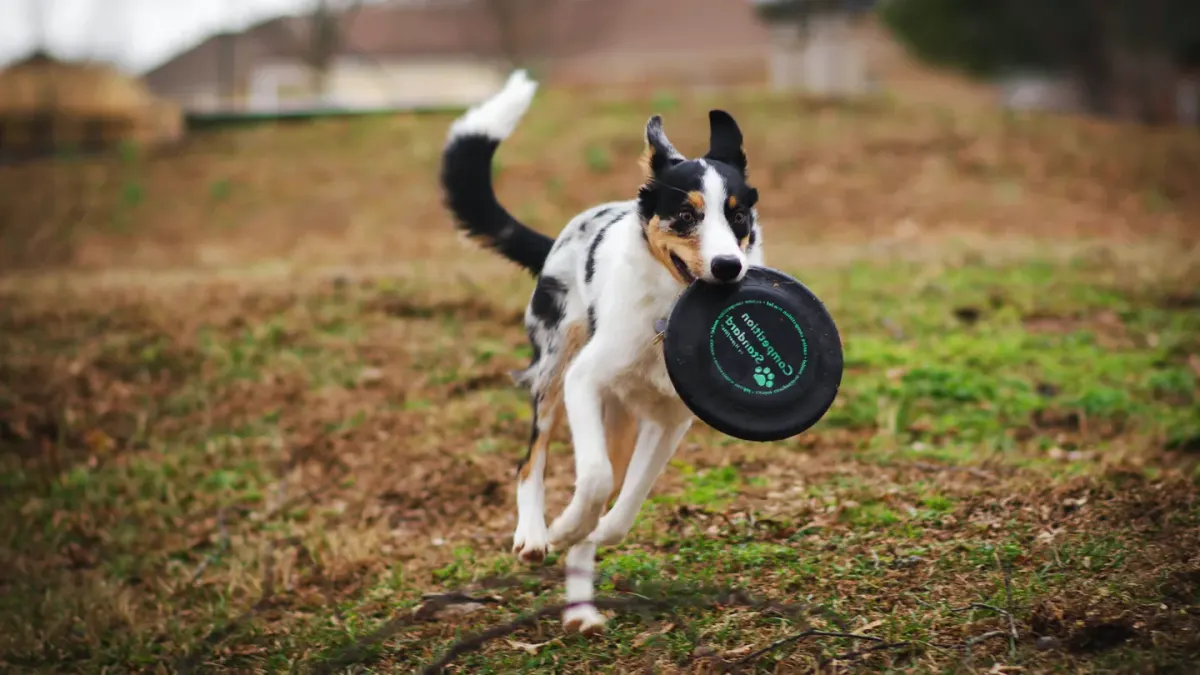
When the leash gets short and the stairs get gated, most owners hear “rest” and think “do nothing.”
I spent last spring talking through this with the owner of an 8-year-old, 74-pound Golden Retriever, three weeks into strict rest after a partial cruciate strain. He was stiff getting up, panting at night, and chewing the rug by day 10. She was afraid any movement would re-injure him, so she had cut walks, play, and training to zero. We did not add back mileage. We added back controlled load, nose work, and position changes, because cartilage, muscle, and synovial fluid all respond to what happens — or does not happen — inside the house.
That is the physiology owners miss. Cartilage has no direct blood supply. It depends on cyclic loading and unloading to move fluid and nutrients in and out of the matrix. Synovial fluid lubricates and nourishes that surface, and research on chondroitin notes it “supports healthy synovial fluid homeostasis” in work published in Frontiers in Veterinary Science. Complete immobility thickens that fluid, stiffens the joint capsule, and lets supporting muscle atrophy within days. Controlled indoor work keeps that pump moving without the impact of running or stairs.
Why small indoor loads protect the joint
Think of a restricted joint as a sponge that still needs squeezing. Gentle weight shifts, slow stand-to-sit repetitions within the allowed range, and short supported standing on a non-slip rug create low-grade compression that helps fluid exchange. That matters more than most supplement decisions.
Food therapy and supplement science sit in the same frame. Glucosamine and chondroitin are among the most studied joint support ingredients for dogs, but their role is supportive, not structural repair. In laboratory work, glucosamine has been reported to “prevent experimentally induced cartilage degradation in vitro” according to researchers in the Journal of Veterinary Medical Science. That is cell-level evidence, not proof of pain relief on your living-room rug. I use joint nutrition to help support the diet around rehab, while movement and weight control do the heavier work for mobility and recovery.
Muscle is the other reason to move. The quadriceps, glutes, and core act as active shock absorbers. Lose them and every allowed step lands harder on ligament and cartilage.
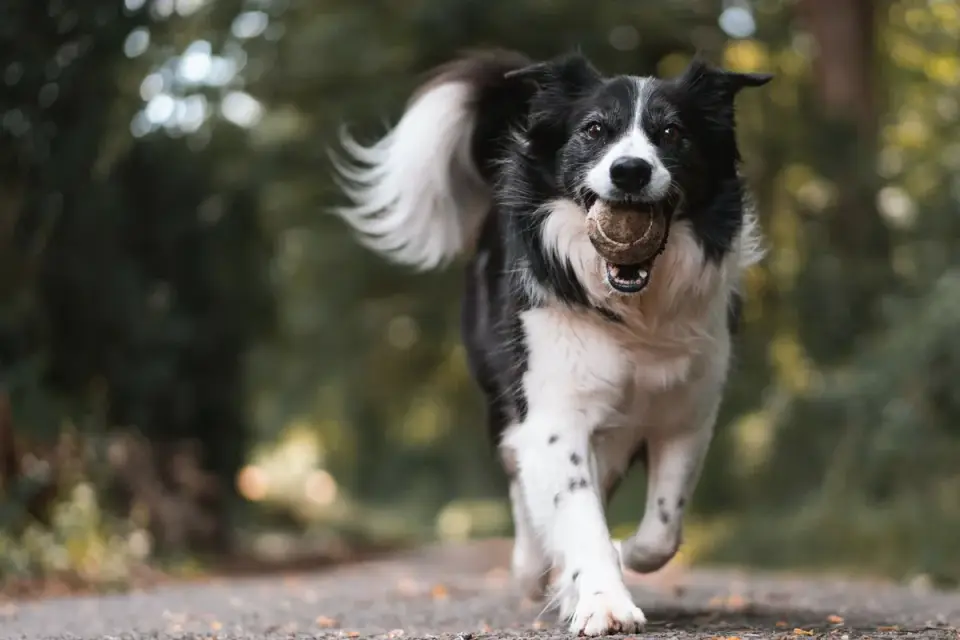
What indoor exercise can look like under limits
Every restricted plan starts with the veterinarian’s written limits: no stairs, no jumping, crate rest except for potty, short leash only. Indoor exercise lives inside those lines, not around them.
Useful options for most post-injury or post-surgical dogs include slow leash laps from kitchen to hallway on a non-slip runner, coached weight-shifting with hands on hips for balance, three to five careful sit-to-stand repetitions if the veterinarian allows that range, and stationary nose work where the dog searches boxes at nose height without climbing or pivoting hard. Keep sessions to five minutes, two to three times daily, and stop for increased lameness, panting that does not settle, or reluctance to start.
I learned the tradeoff the hard way with a 5-year-old, 42-pound Border Collie mix on six weeks of restriction for a back strain. By week two her owner, exhausted and well-meaning, had replaced all walks with 20 minutes of hallway fetch because the dog “needed to tire out.” By day 16 the dog was more sore in the mornings, not less, with a choppy sit and a reluctance to turn left. Fetch, even indoors, is sprint-stop-twist loading. We scrapped it for snuffle-mat foraging, down-stay practice with frequent weight shifts, and two-minute supported stands on a yoga mat. Her morning stiffness eased once the load matched the tissue.
That case shapes what I reject. I do not use indoor fetch, tug, wrestling, or slippery-floor chasing to burn energy during restriction. They reload the exact tissue you are trying to calm.
Feeding, weight, and calm work matter as much as steps
A dog moving less needs fewer calories that week. I usually start by feeding to the current restricted activity level, not the old exercise level, and weighing every seven to ten days. Food therapy here is practical: adequate high-quality protein to help support muscle maintenance, long-chain omega-3s from marine sources as part of a balanced diet, and steady meal enrichment so restriction does not become boredom eating.
Green-lipped mussel is a useful example of how I weigh supplement evidence. It contains omega-3 fatty acids and glycosaminoglycans studied for joint support, and one comparative rodent study reported that “BMO, GMO, and KO all alleviated paw swelling in rats and reduced serum levels of rheumatoid factor (RF), anti-cyclic citrullinated peptide (anti-CCP) antibody, and pro-inflammatory cytokines such as TNF-α and IL-17” in Nutrients. That is inflammatory-marker data in rats, not a canine mobility claim. It may help support nutrition around joint health, but it does not replace weight control, non-slip footing, and the prescribed rehab work.
Mental work counts as exercise under restriction.
Nose games, lick mats, frozen stuffed Kongs, and short cooperative-care sessions lower arousal without loading joints. For ideas that translate well to small spaces, owners often do better swapping high-impact play for structured alternatives, as I describe in Fetch vs. Structured Walks: Which Exercise Actually Serves Your Dog Better? and Warm-Up Exercises Before a Dog Runs or Plays. When cabin fever builds, the principles in How to Keep Your Dog’s Exercise Routine While Traveling help keep a routine predictable without adding risk.
The edge case that changes the plan is the older dog who looks better with a little motion and worse with total stillness. I followed a 12-year-old, 58-pound Labrador with elbow arthritis placed on two weeks of restricted activity after slipping on ice. By day 4 she could barely rise after long crate naps, though she walked reasonably once warm. Total rest was increasing her stiffness. With her veterinarian’s approval we broke the day into brief potty walks plus four three-minute indoor sessions of slow walking, gentle weight shifts, and standing on a rug while eating from a raised slow feeder. Her first-step stiffness after naps shortened by the end of week one. Rest protected the acute flare; frequent low load protected function.
Watch the 24-hour response. Mild tiredness that resolves by the next meal is acceptable. Lameness that is worse the next morning means you overshot.
Your veterinarian sets the boundary, you fill the day inside it with food, footing, calm brain work, and small joint-friendly loads.
Frequently asked questions
How much indoor exercise is safe for a dog on restricted movement?
Follow your veterinarian's written limits first, then aim for brief 3- to 5-minute sessions 2 to 3 times daily of slow leash walking, nose work, and allowed position changes. Stop if lameness, pain, or heavy panting increases, and expect the plan to change at rechecks.
What indoor activities should I avoid during restriction?
Avoid fetch, tug, jumping on furniture, stairs, slippery-floor chasing, and long wrestling sessions. They add sprint, twist, and impact loads that can delay healing even when they happen indoors.
Sources
- Chondroitin and synovial fluid homeostasis study — Frontiers in Veterinary Science
- Glucosamine and cartilage degradation in vitro study — Journal of Veterinary Medical Science
- Green-lipped mussel, black mussel and krill oils in rats study — Nutrients