Lick Granuloma Explained: Why Dogs Lick One Spot Raw
A vet's plain-spoken guide to lick granulomas in dogs — what causes that raw, hairless patch on the wrist or ankle, and what actually resolves it.
A lick granuloma rarely starts as "just a habit" — it starts as an itch, an ache, or a worry the dog hasn't found another way to handle.
On this page
Otis, a six-year-old Doberman mix, came into my exam room with his owner carrying a folded towel loosely over his left wrist. Underneath was a shiny, raised patch about the size of a half-dollar, hairless and slightly weeping at the edges. His owner told me he’d been licking “on and off for a few weeks,” worse in the evenings, worse since they’d moved to a new apartment with a lot of hard flooring and fewer places for him to settle. That combination — a physical lesion with a very specific behavioral backstory — is the pattern I look for every single time a dog comes in with one of these.
What a Lick Granuloma Actually Is
A lick granuloma, sometimes called acral lick dermatitis, is a firm, raised, often ulcerated patch of skin that forms when a dog licks one spot over and over until the skin itself changes shape. According to VCA Animal Hospitals, these lesions occur when a dog finds a spot to lick and starts a cycle of self-trauma, inflammation, and infection — and the front wrist (carpus) and back ankle (hock) are, by far, the most common locations, simply because they’re the easiest joints for a dog to reach comfortably with its tongue.
What makes lick granulomas frustrating for owners is that they don’t look like a bite or a scrape. They look manufactured, because in a sense they are — built one licking session at a time.
Why Dogs Start Licking in the First Place
I never treat the sore before I’ve asked what’s underneath it, because the lesion itself is a symptom, not a diagnosis.
Physical triggers are the first thing I rule out. PetMD notes that the exact cause is unknown but is believed to involve multiple factors — both physical (allergies, infection, joint pain) and psychological (fear, anxiety, compulsive disorder). A dog with an underlying skin allergy, a healing orthopedic injury, or even mild arthritis in that joint may start licking to soothe discomfort, and the licking itself becomes self-perpetuating once the skin barrier breaks down.
Behavioral triggers are just as real, and in my experience they’re underestimated by owners who assume “he’s just being weird.” Multiple veterinary sources describe a strong psychological component tied to fear, anxiety, boredom, or a compulsive disorder, and note that dogs with lick granulomas often show other behavior problems too — separation anxiety, pacing, tail chasing, or other repetitive stereotypic behaviors. There’s also a physiological reinforcement loop at work: licking triggers a mild release of endorphins and has a transient analgesic effect, which is exactly the kind of feedback that keeps a compulsive behavior going even after the original trigger has faded.
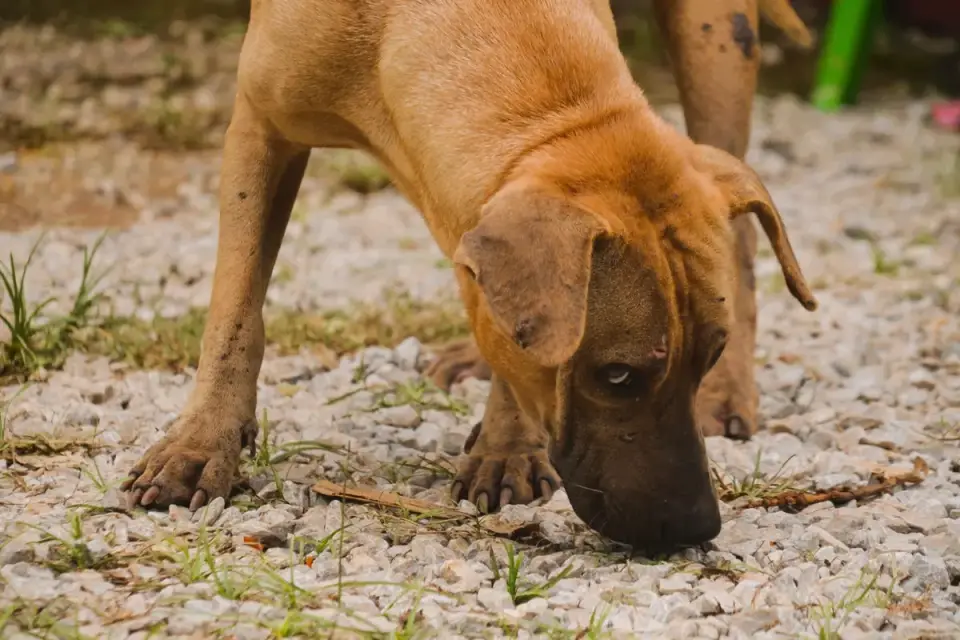
If your dog is a barrier reactor who explodes at the fence line, or one who seems to shred baseboards the moment you leave, it’s worth reading how those patterns compare, because the underlying arousal or anxiety state often overlaps. We’ve written about this in Barrier Frustration vs Aggression: What’s the Difference? and in Boredom vs Separation Anxiety: How to Tell the Difference.
What I Actually Rule Out First
Before I say the word “behavioral” out loud to an owner, I go through a short list in this order, because treating the wrong cause wastes weeks:
- Infection. Secondary bacterial infection is common once the skin breaks down, and according to the Merck Veterinary Manual, the most common reason these lesions recur is that treatment was stopped too soon or the underlying cause was never identified. Deep infections in a lick granuloma can require prolonged oral antibiotic courses, and stopping early is exactly why these lesions keep coming back.
- Allergic skin disease. Atopic dermatitis, food allergy, and flea allergy dermatitis all cause itch that a dog will happily relocate to one obsessive spot.
- Orthopedic or neurologic pain. A dog quietly nursing a sore joint may lick over it long after you’d expect the original injury to have healed.
- Parasites and fungal disease, which are easy to miss on a quick look at a thickened, hairless patch.
- Compulsive or anxiety-driven licking, which I treat as a real diagnosis only after the above have been reasonably excluded — not as a default explanation.
The Case That Changed How I Explain This
In my practice, I’ve watched this play out with a nine-year-old Weimaraner named Duke, who came in with a two-year history of licking the same spot on his right hock. His owners had tried three different topical sprays and an e-collar he wore for months at a time, and the spot would shrink and then come roaring back within a week of the collar coming off. What we eventually pieced together was that Duke’s licking spiked specifically on days his owners worked late — he was fine with a dog walker at lunch, but by 6 or 7 p.m., alone in a quiet house, he’d settle into that same spot on the rug and lick until his owners got home. Once we treated the active infection, changed his evening routine so he wasn’t left alone for the same long stretch, and gave him more structured exercise before his owners left for work, the licking dropped off within about six weeks, and the hair on that hock finally grew back in. It wasn’t a fast fix, and it wasn’t a single fix — it was the infection, the boredom, and the loneliness of that particular part of the day, all addressed at once.
Diet, Exercise, and Behavior Come First
I say this to every owner sitting across from me with a lick granuloma case: don’t reach for a supplement or a topical spray before you’ve addressed the basics, because in a lot of these dogs, the basics are the actual fix. A dog who is under-exercised, understimulated, or routinely left alone for long stretches is a dog whose brain is looking for something to do — and licking is quiet, self-soothing, and always available.
Practical changes that consistently help in my experience: a longer or more vigorous walk before you leave for the day, food puzzles or scatter feeding instead of a bowl set down and forgotten, and a predictable routine so the dog isn’t guessing when you’ll be back. If your dog’s licking tracks closely with time spent chewing at other things, it’s worth reading Is My Dog Chewing Out of Boredom or Anxiety? and How to Stop Puppy Biting and Mouthing for related management strategies, since the underlying drivers frequently overlap.
Where Anxiety Support Fits — and Where It’s Thin
For dogs whose licking is clearly anxiety-linked rather than purely medical, some owners ask about calming ingredients as an add-on to behavior work — never as a replacement for it. The evidence here is real but modest, and I’d rather tell you that plainly than oversell it. A recent review (DOI 10.3390/biomedicines14051019) found that for most species, evidence for chamomile’s calming effects is derived mainly from preclinical studies or traditional use, meaning it may help support relaxation but shouldn’t be treated as a proven anxiolytic. A separate systematic review (DOI 10.7759/cureus.96183) concluded that ashwagandha (specifically the KSM-66 extract studied in humans) has a moderate positive impact on stress reduction and cognitive performance. And for L-theanine, a review (DOI 10.1038/s41380-026-03727-9) found calming effects were supported except for one study on psychotic anxiety, at a dose of 400 mg/day for 8 weeks — notably, that was a human study, not a canine one, so I’d treat any dog dosing as extrapolated rather than proven.
None of that replaces a proper workup. It’s a “may help support the plan” layer, not the plan itself.
What Treatment Actually Looks Like
Most lick granulomas need more than one type of intervention at once. Oral antibiotics are typically the most important treatment when infection is present, and because the tissue is chronically inflamed, courses can run for months rather than weeks — stopping early is the single biggest reason these lesions come back. On top of that, vets often recommend preventing further licking (a cone or a soft recovery sleeve, not just a spray), managing pain if there’s an underlying orthopedic cause, and behavior modification or, in more entrenched compulsive cases, prescription medication such as fluoxetine or clomipramine to address the anxiety driving the behavior.
I’ve sat with owners who wanted a faster answer than that, and I understand the instinct. But rushing a lick granuloma — stopping antibiotics the moment the skin looks better, or skipping the behavioral piece because “he seems calmer” — is exactly how these come back three months later, often worse than before.
Where This Lands
If your dog has a raw, hairless patch on the wrist or ankle that keeps reappearing, don’t self-treat with a spray and hope. Get a vet to rule out infection, allergy, and pain first. Once those are addressed, look honestly at your dog’s daily routine — exercise, mental stimulation, and time spent alone — because in my experience, that’s where the real, lasting fix usually lives. Calming ingredients like chamomile, ashwagandha, or L-theanine can be a reasonable, low-risk addition once the medical picture is clear, but they’re a support, not a shortcut around the harder behavioral work.
Frequently asked questions
Can a lick granuloma heal on its own without treatment?
It's uncommon. Once the skin thickens and the licking cycle is reinforced by relief and endorphin release, most lesions need a combination of infection control, licking prevention, and behavioral change to fully resolve.
Is a lick granuloma always a sign of anxiety?
No. Physical causes like allergies, joint pain, or infection can start the licking, and anxiety or compulsive behavior often layers on top once the cycle begins — a vet exam is the only reliable way to sort out which is driving your dog's case.
Sources
- Lick Granuloma in Dogs — VCA Animal Hospitals
- Acral Lick Granulomas in Dogs — PetMD
- Pyoderma in Dogs and Cats — Merck Veterinary Manual
- Chamomile and stress evidence review — DOI 10.3390/biomedicines14051019
- KSM-66 Ashwagandha systematic review — DOI 10.7759/cureus.96183
- L-Theanine anxiety review — DOI 10.1038/s41380-026-03727-9