Reactive Dog vs. Aggressive Dog: What Actually Separates Them
A vet explains the real difference between a reactive dog and an aggressive dog, how to tell them apart by life stage, and what to do about it starting today.
A reactive dog overreacts to something ordinary; an aggressive dog is behaving with intent to end a threat.
On this page
- The Question I Get Almost Where an Owner First Uses the Word “Aggressive”
- Reactive and Aggressive Aren’t the Same Diagnosis
- Puppyhood: Startle Responses Are Normal, Intent Isn’t
- Adolescence: The Stage Where Reactivity Can Tip Toward Aggression
- Adulthood: Reading the Pattern Instead of the Single Incident
- What to Do Today, Starting With the Walk
- Where the Evidence on Calming Support Actually Stands
- Where This Lands
The Question I Get Almost Where an Owner First Uses the Word “Aggressive”
An owner will sit down in my exam room, put a hand on their dog’s back, and say some version of the same sentence: “I think he’s aggressive.” Almost every time, what they describe next is a leashed dog who barks, lunges, and stiffens at other dogs on a walk, then settles completely once the trigger is gone. That’s reactivity, not aggression, and the distinction matters more than it sounds like it should. A reactive dog overreacts to something ordinary; an aggressive dog is behaving with intent to end a threat. Getting that distinction right changes the training plan, the prognosis, and honestly, how worried you need to be. This is one of the topics I feel strongly about, because I’ve watched owners give up on dogs who were never dangerous — just overwhelmed.
Reactive and Aggressive Aren’t the Same Diagnosis
Reactivity describes an out-of-proportion emotional response to a trigger: barking, lunging, spinning, whining, sometimes shutting down entirely. According to American Kennel Club, dog reactivity involves out-of-proportion emotional arousal, while aggression involves conflict and the intent to cause harm. A reactive dog is usually a fearful or overstimulated dog rather than a dangerous one, and the root cause is more often under-socialization, a bad past experience, or simple lack of training than genetics.
Aggression is a function, not just a feeling — biting, snapping, or fighting aimed at ending a perceived threat or defending a resource. Animal Humane Society notes that a reactive dog can escalate into an aggressive dog over time, and that reactive dogs are not necessarily aggressive dogs even though the two can look similar in a single snapshot. I tell owners to watch for whether the dog can be called off and settled once the trigger leaves, or whether the behavior escalates and follows through — that’s usually where the line sits.
Puppyhood: Startle Responses Are Normal, Intent Isn’t
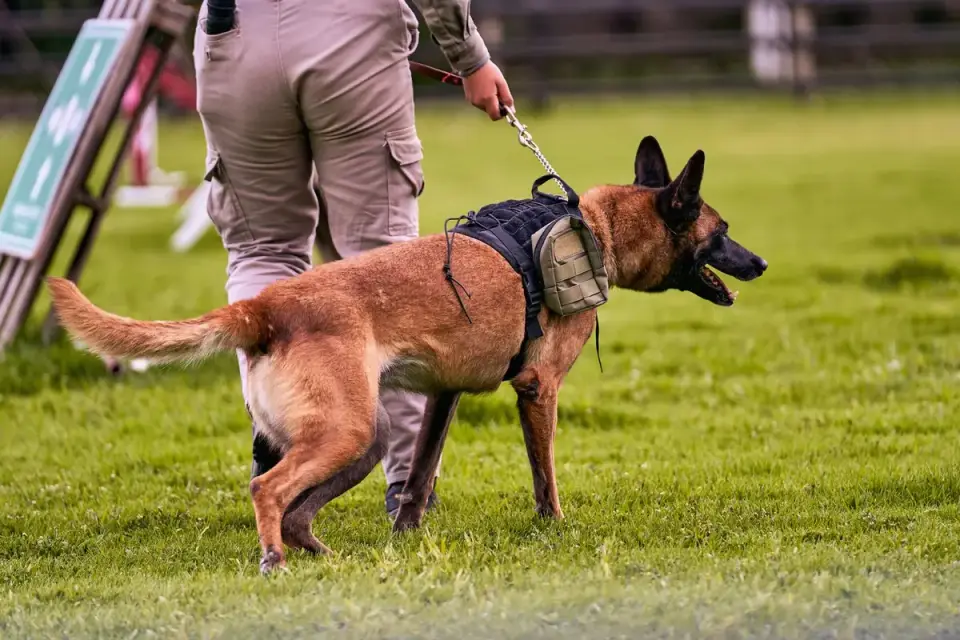
In the first months of a dog’s life, almost everything is new, and a startle bark at a skateboard or a stranger’s hat isn’t a red flag by itself. What I watch for at this stage is recovery time — how quickly a puppy shakes off a fright and goes back to sniffing the grass. A puppy who startles, barks once, and moves on is developing normally. A puppy who startles and then stays stiff, won’t take treats, or tries repeatedly to bite the hand reaching toward them is telling you something different, and that pattern deserves an early consult rather than a wait-and-see approach.
Adolescence: The Stage Where Reactivity Can Tip Toward Aggression
I worked with a Border Collie mix named Piper, adopted at four months and doing fine until she hit about eight months old and thirty-eight pounds. Her owners first noticed it on their regular evening loop past the elementary school — dogs on the other side of the fence would set her off, and by month nine she wasn’t just barking anymore, she was air-snapping if another dog got within a few feet on a narrow sidewalk. What changed wasn’t her temperament; it was that nobody had rerouted her walk or given her distance during her adolescent fear period, so trigger after trigger stacked up with no chance to reset. Her owners had to choose between a longer, less convenient route and a dog who was rehearsing escalation daily. We changed the route first, before anything else, and the air-snapping stopped within about three weeks.
Adolescence — roughly six months to two years depending on breed — is when a dog’s brain is doing serious rewiring, and it’s the window where poorly managed reactivity most often turns into rehearsed aggression. Repeated exposure to a trigger without recovery time, sometimes called trigger stacking, pushes a dog past the point where they can think their way out of a reaction.
Adulthood: Reading the Pattern Instead of the Single Incident
By the time a dog is fully grown, I’m less interested in any one incident and more interested in the pattern around it: what triggers it, how close the dog needs to be, how long it takes to recover, and whether the intensity is climbing over months. Cornell University College of Veterinary Medicine describes managing reactive behavior as an ongoing process of identifying triggers and building distance and predictability into a dog’s routine, rather than a single fix. That’s the framework I use with owners of adult dogs, too.
A short note here, because it gets missed: a dog who is aggressive toward one specific thing — say, resource guarding a bone — is not the same as a globally aggressive dog, and treating them identically usually backfires.
What to Do Today, Starting With the Walk
You don’t need a diagnosis to start managing this. Start with the parts of the day you already control.
- Shorten the exposure window. If your dog reliably reacts on the evening walk, change the route or the time rather than pushing through it. Our guide to how long a dog’s walk should be is a reasonable place to start recalibrating length and pace around a reactive dog’s tolerance.
- Watch for trigger stacking. A dog who was fine yesterday can react today because of a poor night’s sleep, a vet visit, or heat stress earlier in the day — our pavement test and timing rules for hot-weather walks covers one of the more overlooked stacking triggers.
- Add distance before you add correction. More space from the trigger almost always does more than a leash pop.
- Reward disengagement, not just calm. A dog who looks at a trigger and then looks back at you has done the hard part; mark it.
- Build the basics first. If you haven’t already, our Whole-Dog Wellness starting guide walks through the diet, exercise, and routine foundations that make a dog more resilient to triggers in the first place, before you ever touch a training plan.
None of this replaces a professional evaluation if bites have already happened. It’s a starting point, not a substitute.
Where the Evidence on Calming Support Actually Stands
Owners often ask about calming chews or herbal support at this point, and I want to be straight about what the evidence does and doesn’t say. For chamomile, a review in Biomedicines notes that “for the remaining species, evidence is derived mainly from preclinical studies or traditional use” — which is an honest way of saying the animal data is thinner than the human data. For ashwagandha, a systematic review in Cureus “analyzed multiple RCTs and concluded that ashwagandha has a moderate positive impact on stress reduction and cognitive performance,” though again that body of evidence is largely human. For L-theanine, a review in Molecular Psychiatry found benefit “except for one study on psychotic anxiety (SMD = 0.54; 400 mg/day for 8 weeks)” — a human dosing study, not a canine one.
I use structure/function language with owners for a reason: these ingredients may help support a calmer baseline in a dog who is already on a solid training and management plan. They are not a substitute for distance, recovery time, and a trainer’s eyes on your specific dog, and I’d rather an owner spend their first effort on the walk route than on a supplement aisle.

Where This Lands
I still think about a Lab mix named Otto I saw a few years back — eleven years old, seventy-one pounds, arthritic in both hips, who’d never had a behavior problem in his life and suddenly started growling at the neighbor’s dog on their shared fence line. His owner assumed he’d “turned mean” with age. What had actually happened was pain: standing still to bark hurt him, and being startled while stiff made everything worse. Once his mobility was addressed, the growling dropped off almost entirely within a couple of weeks. I bring this up because the reactive-versus-aggressive question isn’t only a training question — sometimes it’s a pain question, a hearing-loss question, or a vision question, especially in a dog whose behavior changes suddenly rather than gradually.
If you take one thing from this: reactivity is a starting point for training, not a character flaw, and it’s usually manageable with distance, recovery time, and consistency. Aggression with intent to harm deserves a faster, more structured response, ideally with a veterinary behaviorist involved. Most owners who come to me worried about an “aggressive” dog are actually describing a reactive one, and that’s genuinely good news — it means there’s more room to work with than they think.
Frequently asked questions
Can a reactive dog become aggressive?
Yes. Reactivity that isn't managed — repeated exposure to triggers without distance or recovery time — can escalate into rehearsed aggressive behavior over months, especially during adolescence.
Is a dog that lunges on leash automatically aggressive?
Not necessarily. Leash lunging is a classic reactivity sign and often reflects fear, frustration, or overarousal rather than intent to harm. Whether it's aggression depends on whether the dog is trying to make contact and follows through when given the chance.
Should I talk to a vet or a trainer first?
If your dog has bitten, is guarding resources with escalating intensity, or the behavior started suddenly in an older dog, start with a veterinary visit to rule out pain or a medical cause. For garden-variety leash reactivity without bites, a qualified trainer is often the right first call.
Sources
- Managing Reactive Behavior — Cornell University College of Veterinary Medicine
- Dog Reactivity: Understanding the Difference Between Reactivity and Aggression — American Kennel Club
- Reactivity and Aggression in Dogs — Animal Humane Society
- Chamomile and Anxiety & Stress — Biomedicines
- KSM-66 Ashwagandha and Anxiety & Stress — Cureus
- L-Theanine and Anxiety & Stress — Molecular Psychiatry