How to Exercise a Deaf Dog Safely Off-Leash
A vet-guided plan for recall, fencing, vibration cues, and conditioning to exercise a deaf dog off leash without losing safety.
Learning to exercise a deaf dog off leash safely starts with vision, vibration, and fenced space.
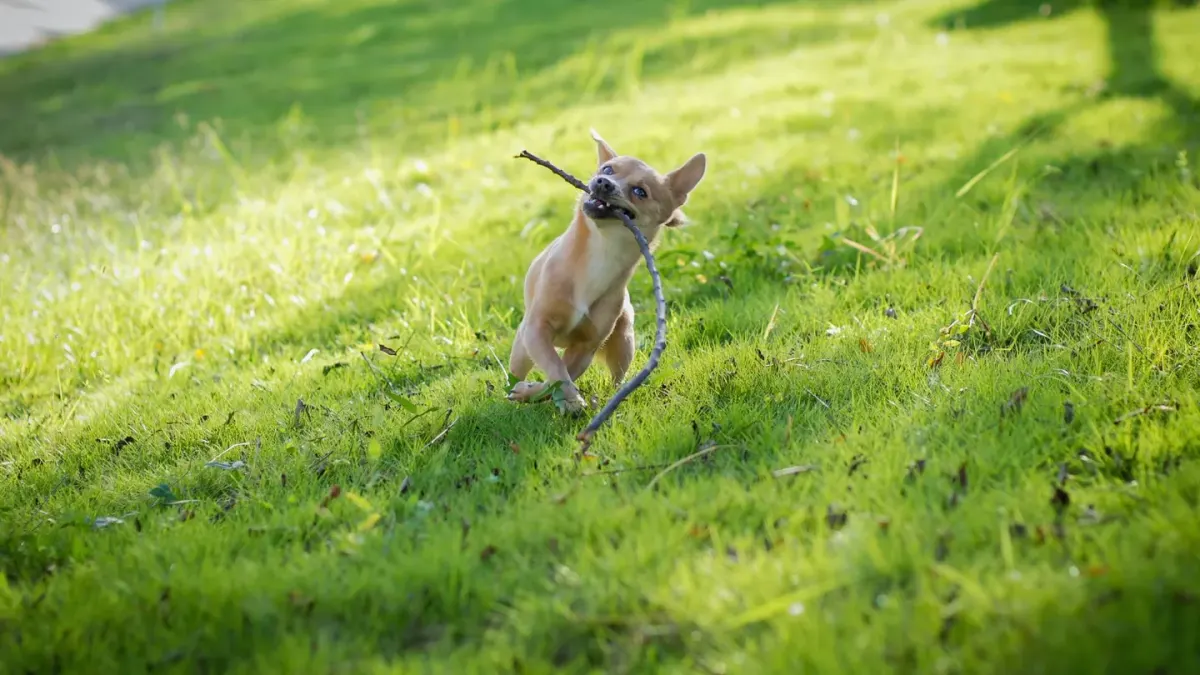
Deaf dogs move first with their eyes and nose, not their ears, so off-leash exercise has to be built around what they can see and feel. Hearing dogs check in when you call; deaf dogs check in when you become worth watching.
That difference is physiological before it is behavioral. Sound triggers an orienting reflex through the auditory brainstem, a fast, involuntary head turn toward novelty. Without that input, a deaf dog relies on visual scanning and air scent, both slower and narrower when the dog is sprinting, sniffing, or aroused. Exercise raises arousal, narrows attention, and increases distance, which is exactly when a recall cue needs to break through.
I worked through this with an owner of a four-year-old, 52-pound Australian cattle dog mix who had lost hearing to chronic ear disease by age three. She could hike for an hour on leash without pulling, but the moment the leash came off in an open field she locked onto movement and stopped checking back. Three weeks in, the owner counted only two visual check-ins during a 30-minute session, and both happened within 15 feet. The decision was not whether the dog needed more running — she did — but whether freedom could be made contingent on a visual recall that worked at 60 yards with distractions.
Conditioning has to come before freedom, and food therapy plus daily movement are the foundation. A lean, well-fueled dog learns faster and recovers cleaner than an overfed, under-exercised one, and what a supplement can realistically do for diet, mobility, and recovery is support the work, not replace it. Glucosamine and chondroitin are among the most studied joint support ingredients for dogs, and one line of research reports an ingredient that supports healthy synovial fluid homeostasis, according to Frontiers in Veterinary Science. That matters because off-leash intervals load joints repetitively. Keep claims bounded: the nutritional evidence may help support whole-patient health during training, but it does not create recall.
Start with a fenced baseline. A snugly fitted long line in a fenced baseball field, tennis court during off hours, or rented sniff spot lets you practice without practicing losing your dog. Teach a single, high-contrast visual recall — both arms raised overhead into a wide V — paired with a vibration cue from a collar used only as a tap, never as correction. Mark the instant the dog turns with a thumbs-up, then reward with high-value food. Guidance on hand-signal foundations from the American Kennel Club aligns with this approach: keep cues visual, consistent, and heavily rewarded.

Why vision replaces voice when the leash comes off
A hearing recall travels around corners. A visual recall does not, so position becomes the cue system. Run arcs rather than straight lines, stay where the dog can see your silhouette against sky rather than brush, and use flashing light at dusk — a headlamp flicked across the ground toward you, not into eyes. Add a stomp or ground vibration only at close range. The strongest counterargument here is that vibration collars look like shortcuts; used poorly, they startle and suppress checking in. My position holds because paired systematically with food, vibration becomes information, not pressure.
The second dog taught me the tradeoff. A two-year-old, 38-pound terrier mix learned a hand-target recall perfectly in the kitchen by day 10, then failed it completely at a busy fenced park. The owner had proofed distance but not arousal, and the dog chose chase over check-in for nine straight minutes. We went back to a 30-foot long line, added structured rest between sprints, and borrowed the warm-up logic in Warm-Up Exercises Before a Dog Runs or Plays. Trotting, figure-eights, and brief sits before release lowered the frantic edge.
Conditioning still decides how much off-leash work is safe.
How to build fenced freedom without building risk
Think in layers: containment, communication, then conditioning. Containment means a truly secure fence, GPS tracker, ID, and a backup leash on your waist. Communication means one recall signal, one all-done signal, and a check-in game that pays every 30 to 60 seconds early on. Conditioning means intervals, not endless fetch.
That last point is where owners overdo it. Compared with free play, structured intervals protect joints and teach impulse control, a contrast explored in Off-Leash Play vs. On-Leash Walks: Which One Actually Exercises Your Dog?. Try two minutes of sniff-walk, 30 seconds of recall-and-reward, then release again. End while the dog still wants more.
Watch the edges. A senior dog with nuclear sclerosis may miss hand signals past 40 yards. A white-coated adolescent, 14 months old and 61 pounds, chased shadows across a three-acre rented field and never saw the recall because the sun was behind me and my dark shirt blended into trees. We switched to a neon vest on me, not him, and moved sessions to morning light. Bright handler, bright signal, shorter distance.
Recall fails safest when you never needed it desperately.
What a sound week of deaf-dog exercise actually looks like
Three to four fenced sessions per week beats one exhausting weekend outing, the same weekend-warrior pattern flagged in Common Dog Exercise Mistakes Owners Make (And What to Do Instead). Mix free sniffing, trained games like hand-target tag and flirt-pole with rules, and leash walks for aerobic base. Track check-in rate, top speed duration, next-day stiffness, and appetite. If check-ins fall below eight in ten recalls on a long line, shorten distance and raise reward value before unclipping.
A brief recap: fence first, make yourself visible, pay check-ins like a job, and let diet and steady conditioning carry joint health.
Frequently asked questions
Can a deaf dog ever be trusted off-leash in unfenced areas?
For most deaf dogs, no. Use fenced fields or a long line, because visual cues disappear behind cover and at distance. Unfenced freedom requires near-perfect proofed recall around wildlife, dogs, and roads.
Is a vibration collar safe for recall training?
When conditioned with food as a neutral tap-to-check-in signal and never used at high intensity for correction, many trainers use it successfully. Fit it snugly, pair vibration with reward, and stop if the dog shows fear or avoidance.
What is the best first recall signal for a deaf dog?
A large, distinct visual signal such as both arms raised in a V, taught at close range with high-value rewards. Keep one signal, practice at increasing distance, and add vibration only after the visual is strong.
Sources
- Synovial fluid homeostasis study — Frontiers in Veterinary Science