Common Dog Exercise Mistakes Owners Make (And What to Do Instead)
A veterinary nutritionist and sports-medicine specialist breaks down the exercise mistakes that quietly wear on a dog's joints, lungs, and recovery — and what to prioritize instead.
Most exercise mistakes I see in dogs aren't about too little activity, but the wrong kind at the wrong time.

On this page
Six weeks into owning his first puppy, one client told me he’d started running his eleven-month-old Vizsla three miles most mornings because the dog “had so much energy he had to burn it off somehow.” The dog was fit, lean, food-motivated, and by all appearances built for it. What he wasn’t built for yet was that mileage on pavement, at that age, on joints that hadn’t finished forming. Nothing dramatic happened at first. Then, over about six weeks, the dog started hitching slightly on his left hind leg after runs, resting more than usual by early afternoon, and hesitating before jumping into the truck bed he used to clear without a thought.
That’s the pattern I want to walk through here, because it’s the one I see most often in my own exam room and hear about constantly from other owners: not laziness, not neglect, but exercise applied with good intentions and the wrong criteria. Before you can fix a mistake, you need to know what you’re actually deciding against — so let’s start with what should be setting the ceiling on a given dog’s activity in the first place.
What Should Actually Set the Limit
Three things decide how much exercise is appropriate for a dog on any given day, and none of them is “how much energy he seems to have.” The first is skeletal maturity — a puppy’s growth plates are still soft, cartilage-capped zones at the ends of the long bones, and repetitive high-impact loading (running, jumping, hard turns) before those plates close can injure them in ways that don’t always announce themselves right away, sometimes resulting in a limb that grows shorter than its pair, according to VCA Hospitals. In small and toy breeds that closure happens around 6–8 months; in large and giant breeds it can run past 14–16 months.
The second is airway anatomy. Flat-faced breeds — French bulldogs, pugs, English bulldogs, and their mixes — carry a structural handicap the rest of the field doesn’t: narrowed nostrils, an elongated soft palate, and a smaller trachea that together make them measurably more exercise-intolerant and more prone to heat stroke than longer-nosed dogs, per UC Davis School of Veterinary Medicine. The third is conditioning versus ambition — what the dog has actually built up to, not what the owner wants the dog to be capable of on a given Saturday. Weigh those three against the calendar, not against the dog’s mood in the driveway, and most of the mistakes below start to explain themselves.
The Weekend Warrior Pattern
The most common version of this I see is the dog who gets a short leash walk most weekdays and then two solid hours of off-leash chasing, wrestling, or fetch on Saturday because that’s when the owner has time. Connective tissue doesn’t work that way. Tendons and ligaments adapt to load gradually; a joint asked to do five days’ worth of work in one session is a joint under real strain, and it’s a common enough setup for soft-tissue injury that it’s worth planning around rather than falling into. If you’ve compared a dog park to structured exercise before, you already know the tradeoff — unpredictable bursts of speed and sudden stops versus a controlled pace the dog’s body can actually keep up with, a distinction covered in more depth in Dog Park vs Structured Exercise for Your Dog. The fix isn’t cutting Saturday out. It’s spreading the same total load across the week so no single day is doing all the damage — or the repair.
Skipping the Warm-Up, Skipping the Cool-Down
Owners rarely skip the walk itself. What gets skipped is the five minutes before and after it — the slow lead-in that raises tissue temperature and the slow lead-out that lets heart rate and breathing settle before the dog flops onto tile. A dog who goes from a dead stop in the living room to a full sprint after a squirrel, repeatedly, without any warm-up, is asking cold muscle and stiff joints to perform like warm ones. This matters more, not less, as a dog ages or already carries some joint wear — which is exactly where duration and pacing decisions start to blend into joint-health decisions, a question addressed directly in How Long Should a Dog’s Walk Be?
I think about a nine-year-old Labrador I worked with, sixty-two pounds, who’d always been the dog that sprinted straight into the lake the moment the leash came off. His owner hadn’t changed anything about the routine — same lake, same dog, same enthusiasm — but over one winter she noticed he was slower getting up from the couch afterward, and by spring he was reluctant to jump back into the truck the way he used to. Nothing about the exercise itself was wrong. What had changed was his tolerance for going straight from stillness to full exertion without any transition, and once we built in even a short leash warm-up before he was released to swim, the stiffness afterward eased noticeably. That’s not a formal outcome, just one dog’s response — but it’s the kind of pattern that shows up often enough in older or joint-compromised dogs to take seriously.
Ignoring Heat, Pavement, and Weather
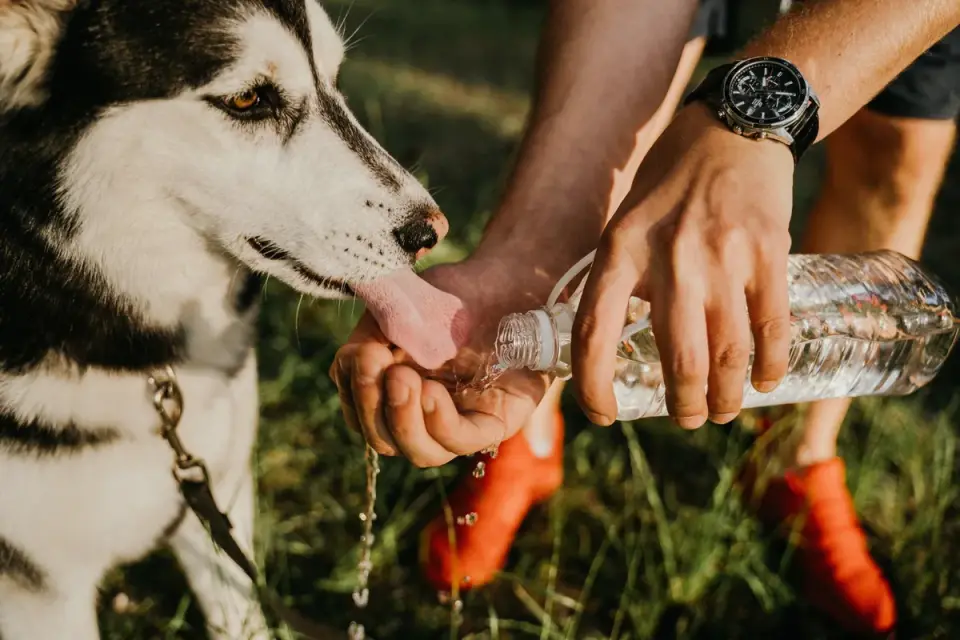
Most healthy dogs handle walks reasonably well up to about 80°F, but risk climbs fast above that, especially with humidity, and the majority of heatstroke cases happen during exercise rather than passive sun exposure, according to Cornell University College of Veterinary Medicine. Pavement compounds it: asphalt on an 85°F day can reach roughly 135°F, hot enough to burn paw pads within a minute of contact. Early morning or evening walks, shade, and water aren’t optional extras in summer — they’re the exercise plan. Brachycephalic breeds need an even wider margin, given their baseline exercise intolerance.
Loading a Joint Before It’s Ready to Carry the Load
This is where the Vizsla from the opening comes back in. Distance running, repetitive stair sets, and hard cutting sports before skeletal maturity ask a developing joint to absorb forces it isn’t structurally finished for yet. The safer approach most veterinary sources land on is roughly five minutes of structured exercise per month of age, twice a day, favoring controlled walking over sprinting or jumping until growth plates close, per VCA Hospitals. Free play in a yard is generally fine because a puppy self-regulates; it’s the imposed distance and pace — the run the owner picked — that tends to cause trouble. For dogs already managing joint wear, low-impact options carry real appeal, and the comparison between swimming and walking for an arthritic dog is worth understanding on its own terms in Swimming vs Walking for an Arthritic Dog.
Where a Joint Supplement Realistically Fits
I get asked, often in the same visit where we’re discussing exercise mistakes, whether a supplement can undo the damage from months of overexertion. It can’t, and I’d rather be direct about that than let an owner believe otherwise. What the evidence supports is narrower and still useful: chondroitin has been shown to support healthy synovial fluid homeostasis, per a peer-reviewed randomized controlled study published in Frontiers in Veterinary Science, while glucosamine HCl has been shown in vitro to help prevent experimentally induced cartilage degradation, according to a review in the Journal of Veterinary Medical Science. Green-lipped mussel powder has demonstrated anti-inflammatory effects in animal models, reducing markers like TNF-α and IL-17 alongside paw swelling, per research published in Nutrients. Glucosamine and chondroitin remain among the most studied joint-support ingredients for dogs, and that evidence base is real — but it supports a joint that’s already being loaded sensibly, not one that’s absorbing weekend-warrior mileage or running on unfused growth plates. A supplement is a support for the exercise plan you’ve already built correctly. It isn’t a substitute for building it correctly in the first place.
The Plan I’d Actually Write Down for an Owner
By the time an owner is sitting across from me describing a dog who’s started slowing down, hesitating on stairs, or getting stiff after activity that used to be routine, the fix is rarely about doing less exercise overall. It’s about redistributing it: spreading load across the week instead of banking it into one day, warming up and cooling down instead of going straight from stillness to a sprint, respecting growth plates and airway anatomy for the dogs who carry those constraints, and treating heat and pavement as active variables rather than background noise. For that Vizsla, the plan wasn’t to stop running — it was to cut the mileage back to something closer to a controlled fifteen minutes on soft ground, hold there until his growth plates were confirmed closed, and rebuild distance gradually from that floor. His gait normalized within a couple of months. If you’re weighing structured routes against off-leash freedom for your own dog, or a treadmill against the outdoors, the underlying question is the same one running through everything above: is this load something the dog’s body, at its current stage, can actually absorb — a distinction explored further in Dog Treadmill vs Outdoor Walking. What would change about your dog’s week if you asked that question before every hard session, not just after the limp shows up?
Frequently asked questions
How much exercise is too much for a puppy?
A commonly used guideline is about five minutes of structured, low-impact exercise per month of age, twice a day, until growth plates close — roughly 6–8 months in small breeds and up to 14–16+ months in large and giant breeds, per VCA Hospitals.
What temperature is too hot to exercise a dog?
Most healthy dogs do reasonably well below about 80°F, with risk climbing sharply above that, especially with humidity; pavement can also reach temperatures far higher than the air itself, according to Cornell University College of Veterinary Medicine.
Can a joint supplement fix damage from overexertion?
No. Ingredients like glucosamine, chondroitin, and green-lipped mussel are studied for supporting joint structure and comfort, not for reversing injury from improper exercise — the exercise plan itself has to be corrected first.
Sources
- Summer heat safety tips for dogs — Cornell University College of Veterinary Medicine
- How Exercise Can Damage Puppy Growth Plates — VCA Hospitals
- Brachycephalic (Short-nosed) Dogs — UC Davis School of Veterinary Medicine
- Protective effects of turmerosaccharides rich extract of Curcuma longa L. in osteoarthritic dogs — Frontiers in Veterinary Science
- Glucosamine HCl and cartilage degradation — Journal of Veterinary Medical Science
- Green-lipped mussel powder and inflammatory markers — Nutrients