How to Structure a Low-Impact Exercise Session Step by Step
A vet-nutritionist guide to building a safe low-impact dog workout — warm-up, main set, and cool-down with diet and joint support in context.
You can build a low-impact workout that protects joints without giving up real conditioning if you sequence it right.
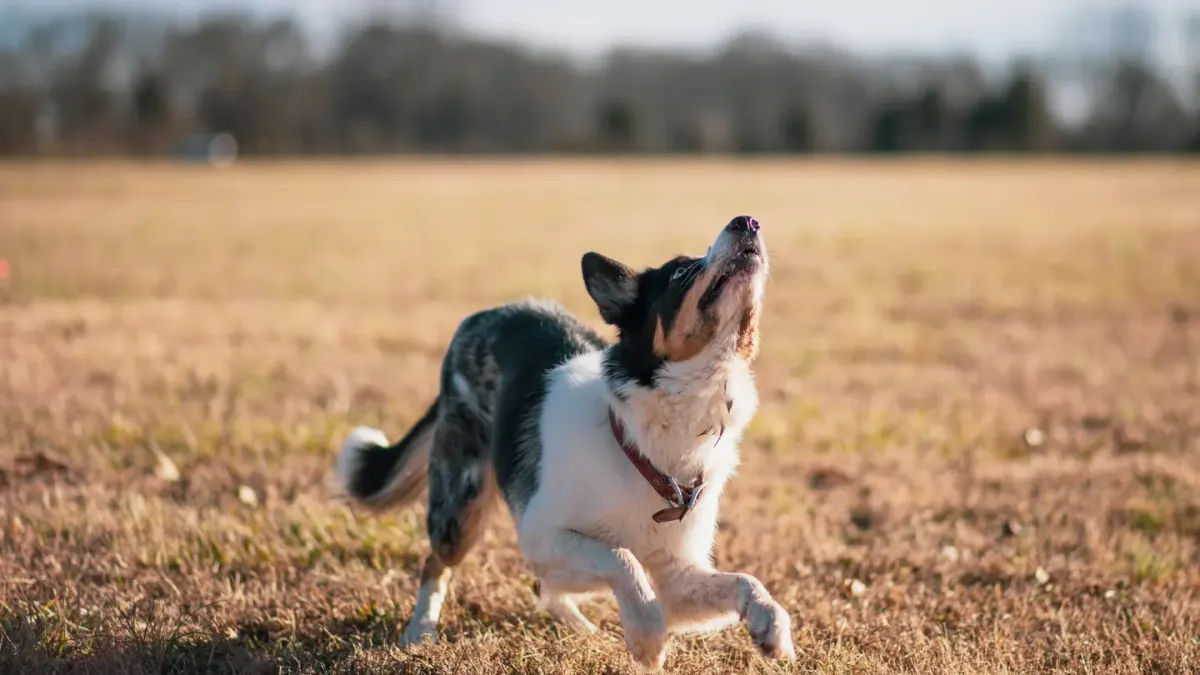
A nine-year-old, 62-pound Golden Retriever stood stiff for the first dozen steps on our morning recheck, then loosened into an easy walk by the end of the block. Her owner wanted to keep her moving without grinding sore shoulders and hips, and she asked whether swimming, hill walks, or longer pavement loops would help most. Three weeks in on a timed low-impact plan, her owner reported she rose from her bed in two tries instead of four, and that change told us more than any single supplement label ever could. That is the decision you are making with a low-impact session: enough rhythmic work to support muscle and mobility, without the hard stops and pounding that leave an older or deconditioned dog sore the next day.
Start with tissue temperature, not mileage
Think chronologically, the way rehab teams do. Cold muscle and thick joint fluid do not glide well, so the first five to ten minutes should raise temperature and circulation before you ask for effort. I like a leash walk on level ground, letting the dog sniff and choose pace, then two or three minutes of gentle range-of-motion work like slow figure-eights and weight shifts.
This is where food therapy and body condition matter more than any powder or chew. Extra weight raises load on every step, and a diet that holds lean muscle gives you a larger engine for low-impact work. When owners ask about joint ingredients here, I weigh what a supplement can realistically do for diet, mobility, and recovery. Glucosamine and chondroitin are among the most studied joint support ingredients for dogs, which is why I discuss them often, but the published work I trust most describes function in careful terms. One peer-reviewed trial summarized in Frontiers in Veterinary Science reported that chondroitin “supports healthy synovial fluid homeostasis,” and that framing fits how I use it — as background support for normal joint lubrication alongside training, not as a warm-up in a bottle.
If you want a refresher on movement prep, borrow ideas from Warm-Up Exercises Before a Dog Runs or Plays and keep the intensity conversational. You should be able to talk while your dog trots beside you.
Build the middle so joints share the load
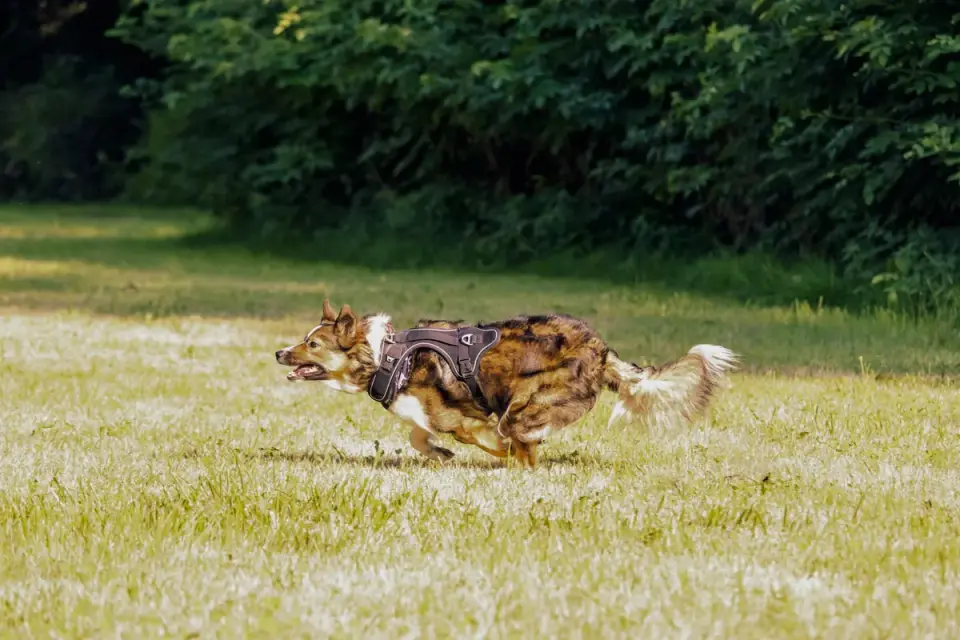
The main set should be steady, rhythmic, and boring on purpose. For most pet dogs that means 15 to 25 minutes of brisk walking on forgiving footing, split into intervals with sniff breaks, rather than sprint-recall games with hard braking. Grass, packed trail, or dry turf beats concrete, and a slight grade for 30 to 60 seconds at a time builds hind-end strength without impact.
I learned this tradeoff with a four-year-old, 48-pound Border Collie mix who lived for fetch. His owner replaced two daily ball sessions with leash intervals, and by day 10 the dog was restless and mouthy in the evenings even though his limp after play had faded. Fetch had been conditioning power and arousal, not just fitness, and removing it left a behavior gap. We kept the low-impact base but added structured tug with rules and a short nose-work finish, which solved the restlessness without bringing back the sliding stops. That is a pattern I see often when owners compare Fetch vs. Structured Walks: Which Exercise Actually Serves Your Dog Better? — you have to replace both the calories and the job.
Watch breathing and gait to dose the work. A light pant that resolves within a few minutes of slowing down is useful effort.
Aim for symmetry over speed.
Laboratory work helps explain why steady loading matters for cartilage nutrition, though it does not prove a chew prevents arthritis in your dog. An in vitro study reported in the Journal of Veterinary Medical Science found that glucosamine “prevent experimentally induced cartilage degradation in vitro,” which grounds my interest in that ingredient while reminding us that a dish is not a dog park. A separate mechanistic paper in Nutrients noted that “BMO, GMO, and KO all alleviated paw swelling in rats and reduced serum levels of rheumatoid factor (RF), anti-cyclic citrullinated peptide (anti-CCP) antibody, and pro-inflammatory cytokines such as TNF-α and IL-17.” That is rat and cell-level evidence for green-lipped mussel fractions, useful for hypothesis-building, thin for promising pain relief.
Close the loop and decide what to repeat
The last five to ten minutes decide how tomorrow feels. Taper to an easy walk, offer water, check pads and nails, and watch the sit-to-stand when you get home. Mild tiredness that fades by evening is fine. Stiffness the next morning, lagging behind on a familiar route, or licking a single joint means you overshot duration or footing.
An edge case changed how I counsel travel weeks. A seven-year-old, 34-pound Cocker Spaniel did beautifully on grass loops at home, then stiffened after three days of hotel hallway pacing and elevator standing during a family trip. By day 4 she hesitated on stairs she normally managed. We did not need more exercise; we needed distributed motion. Her owner broke the day into four ten-minute sniff walks plus three minutes of slow cookies-between-knees for lateral bending, and she moved normally within two days of returning home. Travel often removes the varied surfaces and micro-movements that keep low-impact work effective, so if you are on the road, use ideas from How to Keep Your Dog’s Exercise Routine While Traveling rather than cramming a long weekend walk to catch up. And if you split time between parks and pavement, this comparison helps you stay honest about load: Dog Park vs Structured Exercise for Your Dog.
My recommendation is evidence-bounded: build the week around three to five low-impact sessions with a real warm-up and cool-down, feed to lean condition, and use a well-formulated joint supplement only as adjunct support for normal mobility. The strongest counterargument is that supplements might let you skip the tedious parts — buy the chew, keep the hard fetch, skip the warm-up. I still land on training and diet first because no ingredient has been shown to unwind repeated impact loading, while graded walking, strength footing, and weight control may help support whole-patient health day after day.
Frequently asked questions
How long should a low-impact dog workout last?
Most beginners do well with 5 to 10 minutes of easy warm-up walking, 15 to 25 minutes of steady main-set walking with breaks, and 5 to 10 minutes of cool-down. Add about 10% per week if recovery is clean.
What are good low-impact activities besides walking?
Level sniff walks, gentle grades, shallow-water wading or swimming with rest breaks, and slow cavaletti poles or figure-eights build muscle without hard stops. Avoid repeated sprint-fetch and jumping until fitness and gait are solid.
How do I know I pushed too hard?
Watch for lagging, heavy panting that does not settle quickly, a shortened stride, or stiffness the next morning. Scale back duration or switch to softer footing, and check with your veterinarian if lameness persists.
Sources
- Synovial fluid homeostasis trial — Frontiers in Veterinary Science
- Cartilage degradation in vitro study — Journal of Veterinary Medical Science
- Mussel oil fractions and inflammatory markers — Nutrients