Is It Normal for an Older Dog to Prefer Shorter Walks?
Why senior dogs slow down on walks, how to tell normal aging from pain, and how to adjust distance and pace safely.
Most older dogs trade that long loop for a slower sniff-and-stroll, and learning to read that shift keeps joints comfortable without giving up movement altogether.
On this page
The beagle mix used to pull toward the far corner of the park every morning, nose high and tail beating. Now at 13, she makes it to the second bench, sits down hard, and looks up at her owner with that soft, tired stare that asks for permission to turn back. Her owner wondered if she was giving up too easily, or if pushing for the full 20-minute loop was kinder than letting her quit. That moment at the bench is the real decision point for so many senior families — not whether to stop walking, but how to keep walking in a body that tires faster.
That slowdown is common. Stamina drops with age as muscle mass thins, joints stiffen, and the heart and lungs work harder to keep up. The AVMA notes that senior pets often need adjustments in exercise and routine veterinary monitoring, and that fits what I see in rehab work: shorter, steadier movement helps maintain comfort and joint range without the crash afterward.
When a short walk is just an older body talking
Aging changes gait before it changes spirit. Steps get choppier, turns get wide, hills feel bigger, and recovery takes longer. A dog who still lights up for the leash but fades after five to ten minutes is usually showing normal endurance loss, not disobedience.
Watch the pattern across a week, not a single walk. A normal senior rhythm looks like this: eager start, steady sniffing pace, then a gradual lag, heavier panting, or a sit-down that says enough. With a short rest and water, she rebounds and walks home willingly.
A shorter loop that still backfired
A 9-year-old, 72-pound Labrador from my notes loved his evening mile. When he started lagging at the halfway mark, his family tried to keep him fit by keeping the same mile but adding a faster pace three evenings in a row to tire him out before bed. By night three he was lagging after six blocks, stiff rising the next morning, and reluctant to take the porch steps for about 36 hours. The intention was good — protect his conditioning — but the harder push left him sorer and less willing to move. We cut the route in half, kept the pace at his sniffing speed, and added a five-minute gentle range-of-motion warm-up inside before clipping the leash. Within ten days he was pulling toward the door again, just for a shorter adventure.
That tradeoff is the one I see most. Owners try to preserve fitness by holding distance constant. The older body needs the opposite: hold comfort constant and let distance float.
How to adjust the walk without losing it
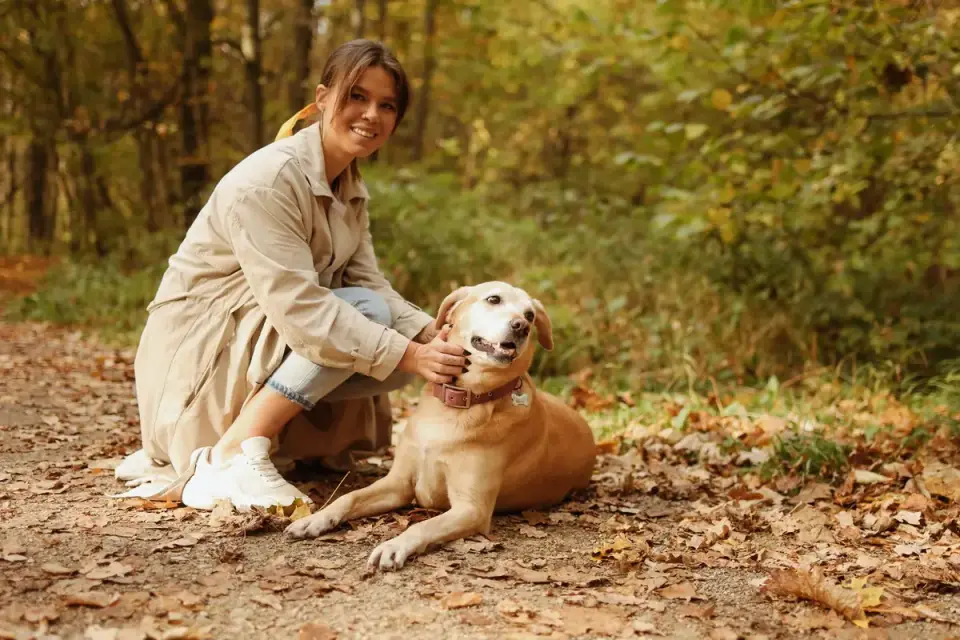
Think in terms of support, not subtraction. Gentle, frequent movement helps maintain circulation, muscle tone, and joint mobility better than one long weekend-style outing.
What helps most dogs:
- Split one long walk into two or three short strolls
- Warm up with slow indoor walking and sniffing for a few minutes
- Keep surfaces grippy and even; grass or dirt over slick pavement
- Let her set the pace and sniff — that mental work counts
- End while she still has a little gas left, not when she is spent
The Merck Veterinary Manual describes similar age-related slowing and stiffness in older dogs, and recommends regular, gentle exercise paired with weight control and veterinary checks. That matches my rehab bias: keep her moving a little every day.
This is also where food and body condition quietly matter. Extra weight makes every step cost more. You can learn more in How Feeding Amounts Change With Age and compare formats in Fetch vs. Structured Walks: Which Exercise Actually Serves Your Dog Better?.
Short can be enough.
When shorter is not enough information
Some changes should prompt a vet visit rather than a route change. Sudden refusal, crying out, knuckling, new limping, heavy panting at rest, coughing, or collapsing are not normal aging. Neither is a dog who lies down and will not get up, or who is markedly worse on one side.
Cold mornings, hot afternoons, and slippery floors will also unmask soreness. If heat is part of the problem, How to Help a Senior Dog Cool Down Safely After Light Summer Exercise gives a practical cool-down routine to try after those light outings.
The porch dog who rewrote the plan
An 11-year-old small terrier mix, adopted as a senior at around age eight, had settled into two 15-minute neighborhood loops a day. Then a vestibular episode in late March left her wobbly for nearly two weeks. Once cleared to walk again, she panicked at the curb where she had stumbled and planted her feet. The usual advice — keep the same route for consistency — had to bend. Her owner switched to four driveway-to-mailbox strolls, about 40 yards each, on grass, plus slow figure-eights in the living room. No traffic, no curb, no pressure. After nine days of those micro-walks she chose to turn the corner herself, and that choice told us more than any distance goal could.
That is the exception that proves the rule. Consistency matters, but safety and confidence matter more. Shrink the world until the dog volunteers to expand it.
My position is simple, and I hold it even when owners worry they are babying the dog: shorten the walk before the dog has to ask twice. A senior who finishes wanting a little more will go again tomorrow. That rhythm helps maintain muscle, joint comfort, and that bright, engaged brain. If you are seeing lagging, long recoveries, or behavior changes in familiar places, bring notes to your vet and read Why a Senior Dog Gets Disoriented in Her Own Backyard for what else to watch. Keep expectations realistic, keep the leash loose, and let the shorter walk do its quiet work.
Sources
- Senior Pets — AVMA