How to Help a Senior Dog Cool Down Safely After Light Summer Exercise
A vet-trained guide to reading a senior dog's heat signals after a walk, what to do in the first ten minutes, and when panting means more than "just hot."
A senior dog's cooling system is already working overtime before the walk even starts — here's how to help it catch up safely.
On this page
- What to do in the first ten minutes after the walk
- Why an older dog’s thermostat is already running behind
- A ten-minute walk, a twelve-year-old dog, and a decision that shouldn’t be complicated
- The failed fix: cooling him down harder, not smarter
- The edge case that changes the advice: a dog who looks fine but isn’t recovering
- Where I’d push back on the instinct to just walk earlier or later
- What actually belongs in your summer routine
- The brief recap
What to do in the first ten minutes after the walk
Before the explanation, the checklist — because in the moment, you want steps, not physiology.
- Stop and shade first. Get out of direct sun before anything else; this isn’t optional, and it costs nothing.
- Offer small amounts of room-temperature water. Skip the ice water and skip letting her gulp a full bowl.
- Wet the belly, groin, and paw pads, not the back — that’s where heat actually transfers out.
- Point a fan at her or move her into airflow. Evaporation is doing the real work, not the wet fur alone.
- Watch the breathing pattern, not just the panting volume. A dog that keeps panting hard past 15–20 minutes of rest, or whose gums look brick-red or pale, needs a vet call — not a “let’s see.”
- Log the walk. Duration, surface temperature, and how long it took her to settle. That log is more useful at her next checkup than a vague “she seemed tired.”
Everything below explains why those six steps are the ones that matter, and where the checklist stops being enough.
Why an older dog’s thermostat is already running behind
A dog cools almost entirely through panting — moving air over the moist surfaces of the tongue and airway to evaporate water and shed heat, since dogs don’t sweat the way people do (Cornell Riney Canine Health Center). That system depends on a feedback loop: a hypothalamic set point senses core temperature, drives respiratory rate up, and expects the evaporative loss to bring the number back down within a predictable window. In a healthy young dog, that loop is fast and forgiving. In an older dog, it is often running with less reserve — reduced cardiac output, stiffer airways, and in many cases an underlying endocrine or metabolic condition (hypothyroidism, Cushing’s, early kidney disease) that blunts how efficiently heat gets shed in the first place. That’s the axis I trace before I ever talk about the walk itself: it isn’t that senior dogs “get hot faster,” it’s that the loop closing the gap between exertion and recovery has less margin than it used to.
A dog’s normal resting temperature runs 99.5–102.5°F, and heat-related illness becomes a real concern well before the dramatic 106°F heatstroke threshold — vulnerable dogs, seniors included, are advised to stay in cooled environments once ambient temperatures climb past roughly 80–95°F depending on individual risk factors (PetMD). That’s a wide buffer most owners don’t know exists, and it’s the reason “light exercise” still deserves a cooldown protocol rather than an afterthought.
A ten-minute walk, a twelve-year-old dog, and a decision that shouldn’t be complicated
She was a twelve-year-old, 58-pound Labrador mix, out for what her owner described as “barely a walk” — ten minutes around the block at 7 in the evening, temperature still sitting near 88°F. By the time they reached the driveway she was panting hard enough that the owner called it “gasping,” and it took nearly eighteen minutes of rest in the shade before her breathing settled back to normal. Nothing about that walk looked reckless from the outside. The decision the owner was actually weighing wasn’t whether to exercise her dog in summer — it was whether an eighteen-minute recovery on a mild evening was normal variation or a sign that light exercise needed to shrink further. It’s a small, unglamorous decision, and it’s the one that actually protects a dog: not avoiding summer walks, but recalibrating what “light” means as the recovery window stretches.
The failed fix: cooling him down harder, not smarter
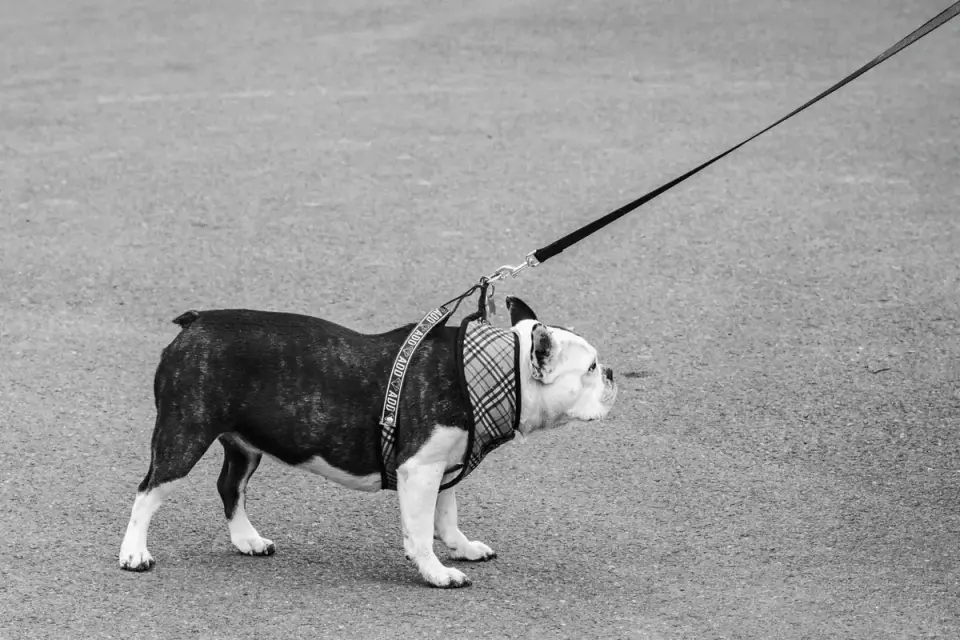
I’ve seen owners respond to a slow recovery by escalating the cooling instead of shortening the walk — dumping a bucket of ice water over a dog’s back, or wrapping him in a soaked towel and leaving it on. Both feel proactive. Neither is what the evidence supports. Ice-cold water can cause peripheral vessels to constrict, which traps heat at the core instead of releasing it, and a wet towel left in place insulates rather than cools once it warms to skin temperature — the opposite of the intended effect. First-aid guidance instead favors room-temperature water applied to the paws, belly, and neck, with airflow doing the evaporative work, and it explicitly excludes ice-water immersion for this reason (VCA Animal Hospitals). One nine-year-old spaniel I worked with had owners who’d been icing him down after every summer walk for weeks before a checkup revealed what was actually going on: his recovery times weren’t improving because the cooling method wasn’t the limiting factor — an underlying thyroid issue was. Fixing the cooling technique matters, but it isn’t a substitute for asking why recovery is slow in the first place.
The edge case that changes the advice: a dog who looks fine but isn’t recovering
The scenario that reshaped how I counsel owners wasn’t a collapse — it was a fourteen-year-old terrier mix who never seemed distressed during a walk but consistently took over 30 minutes to stop panting afterward, week after week, across an entire July. No wobbliness, no red gums, no vomiting — the signs owners are told to watch for. By day 24 of a symptom diary her owner kept at my suggestion, the pattern was unmistakable: recovery time was creeping longer even as walk length stayed flat at the same ten minutes. That’s the edge case worth knowing: a dog who never crosses into visible heat-stroke signs can still be showing you, gradually, that her margin is shrinking. Heat-related illness doesn’t always announce itself with the textbook signs — bloody diarrhea, collapse, a temperature north of 104°F (Royal Veterinary College) — and a slow, steady drift in recovery time is often the earlier, quieter signal.
Where I’d push back on the instinct to just walk earlier or later
The obvious fix — move the walk to dawn or dusk — genuinely helps and should be your first move, since common exercise mistakes owners make often come down to timing and surface heat as much as duration. But timing alone doesn’t address the underlying loop I described above. A dog whose thyroid or cardiac function is already compromised can still overheat on a cool morning if the walk is long enough or the surface holds heat. That’s why I’d rather an owner track recovery time than chase the “right” hour of the day. If you’re choosing between structured walks and unstructured play like fetch for a senior dog in summer, the structured, shorter, shade-aware option wins almost every time — not because fetch is bad, but because it’s harder to control intensity and stopping points once a ball is in motion. The same logic applies to open-ended dog park time versus a planned route: a park visit is much harder to cut short at the ten-minute mark than a walk you planned to be ten minutes.
What actually belongs in your summer routine
Short version, in prose: exercise early or late, keep sessions brief and predictable, cool with room-temperature water and airflow rather than ice, and treat a lengthening recovery time as data, not noise. None of that requires a supplement to work. Diet and hydration status matter at the margins — a well-hydrated, lean senior dog simply has more thermal buffer than one carrying extra weight — but they don’t override the basic physiology above. If a product marketed for “cellular support” or antioxidant benefit is part of your senior dog’s routine already, understand that it’s addressing a different layer of aging biology entirely, not acute heat tolerance; nothing sold over the counter substitutes for shade, water, and a shorter walk on a hot evening.
The brief recap
A senior dog’s cooling system has less margin than it used to, not because seniors are fragile, but because the feedback loop between exertion and recovery runs slower. Watch recovery time, not just the walk itself. Cool with room-temperature water and airflow, never ice. And if an easy ten-minute walk keeps taking twenty extra minutes to shake off, that’s worth a call to your vet before it becomes an emergency room visit.
Frequently asked questions
How long should it take a senior dog to stop panting after a light walk?
Most healthy dogs settle within 10–15 minutes of shade and rest. If it's regularly taking 20 minutes or more, or the time is creeping up week over week, that's worth mentioning to your vet rather than waiting for a more dramatic sign.
Is it safe to hose a senior dog down with cold water after exercise?
Room-temperature water on the paws, belly, and neck is the recommended approach; ice-cold water can constrict blood vessels and trap heat at the core instead of releasing it.
Sources
- Heatstroke: A medical emergency | Cornell University College of Veterinary Medicine — Cornell Riney Canine Health Center
- How Hot Is Too Hot for Dogs? — PetMD
- Heat Stroke in Dogs — VCA Animal Hospitals
- Heatstroke in dogs and cats - prevention, symptoms and first aid tips for pet owners — Royal Veterinary College