Dog Treadmill vs Outdoor Walking: What Actually Builds a Healthier Dog
A veterinary nutritionist compares treadmill conditioning and outdoor walking for dogs, weighing joint load, sensory enrichment, and when each tool earns a place in a dog's routine.
Pick the tool that fits the dog's joints and the owner's week — then use the other one on the days the first one fails you.
On this page
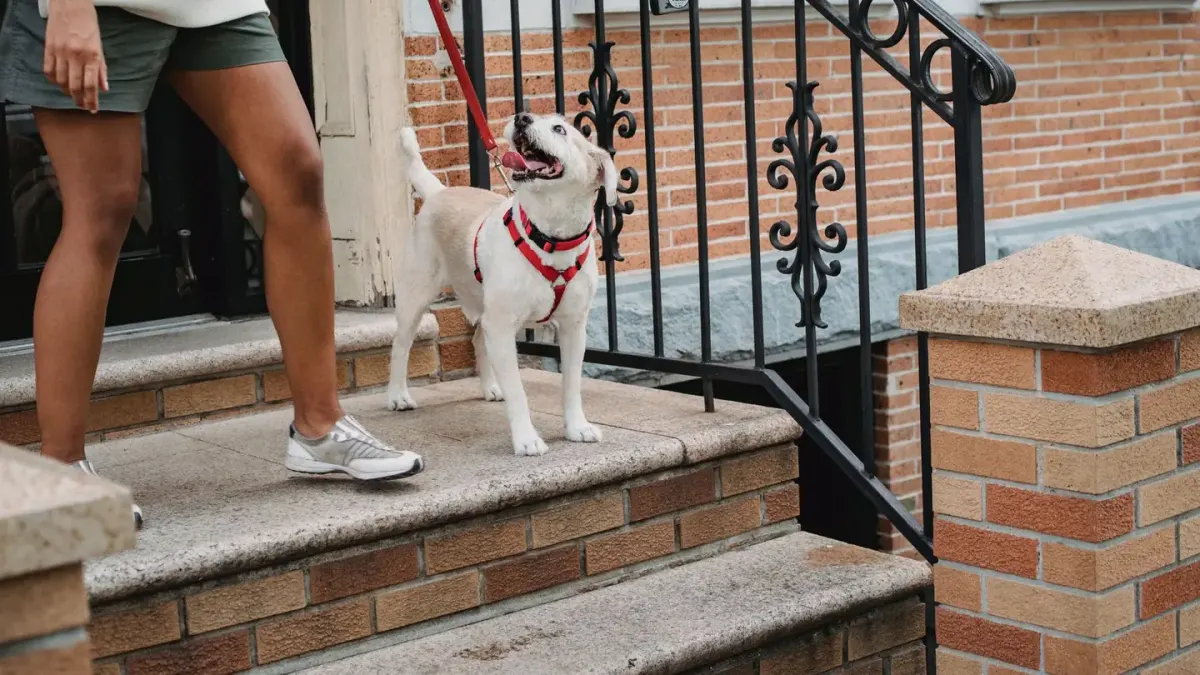
A client brought in her nine-year-old Labrador, Barley, last winter after he’d started slowing down on the stairs. She’d bought an underwater treadmill session package at a rehab facility across town and asked me, half-joking, whether she should just get a dog treadmill for the house instead of walking him in the cold. He was sixty-eight pounds, a little heavy through the ribs, and the owner had noticed the slowdown mostly on the back steps to the yard, worse after he’d been lying on the tile floor for a while. That’s a fairly common presentation, and it’s also where this question stops being theoretical: the surface, the pace, and the terrain a dog moves across aren’t interchangeable details. They change what’s actually happening in the joint.
What decides the comparison isn’t the machine — it’s the load
Before recommending either tool, I look at three things: the dog’s joint status, what the walk or run needs to accomplish, and what the owner can realistically sustain. A flat treadmill belt delivers a repetitive, low-variability stride at a fixed speed and incline. That consistency is genuinely useful for controlled conditioning — building cardiovascular fitness or reintroducing exercise after injury — because it removes variables a vet or rehab therapist doesn’t want in the mix yet. Outdoor walking gives up that control in exchange for varied terrain: grass, gravel, curbs, slopes. Each of those surfaces changes how weight distributes across a limb stride to stride, which is part of what keeps stabilizing muscles around a joint engaged rather than just the prime movers.
Neither is universally “better.” A treadmill earns its place when consistency matters more than variety — early rehab, weight-loss conditioning under supervision, or bad-weather backup. Outdoor walking earns its place for almost everything else, because the sensory and proprioceptive work of uneven ground is difficult to replace indoors.
Joint support and exercise choice are the same conversation
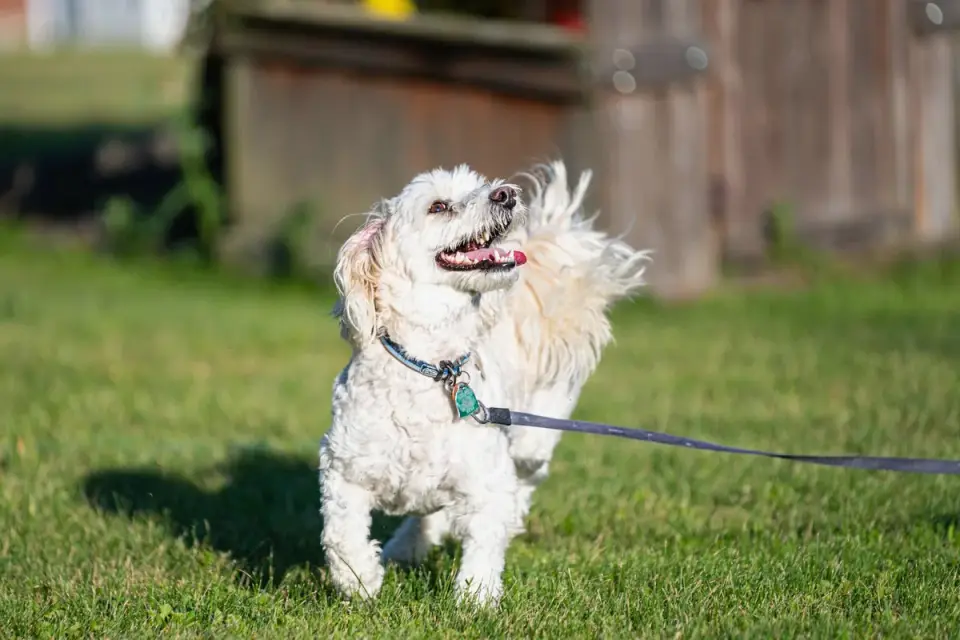
Owners often ask about joint supplements in the same breath as exercise questions, and that’s not a coincidence — both are trying to manage load on cartilage and synovial tissue. It’s worth being honest about what a supplement can and can’t do here. Chondroitin has been studied for its role in joint tissue; a 2026 paper in Frontiers in Veterinary Science describes chondroitin as supporting healthy synovial fluid homeostasis. That’s a structural claim, not a promise that a capsule undoes the mechanical wear from the wrong exercise routine. Glucosamine HCl has similarly been shown, per a review in the Journal of Veterinary Medical Science, to help prevent experimentally induced cartilage degradation in vitro — evidence from lab conditions, not a guarantee of outcome in a living, moving dog. Green-lipped mussel powder has data too: research in Nutrients found that mussel-derived compounds alleviated paw swelling and reduced markers of inflammation in animal models. Useful groundwork, but it doesn’t substitute for the exercise decision itself. I’d rather an owner get the walking surface and the pace right first and treat a joint supplement as a supporting player, not the headline.
The dog in front of you changes the answer more than the tool does
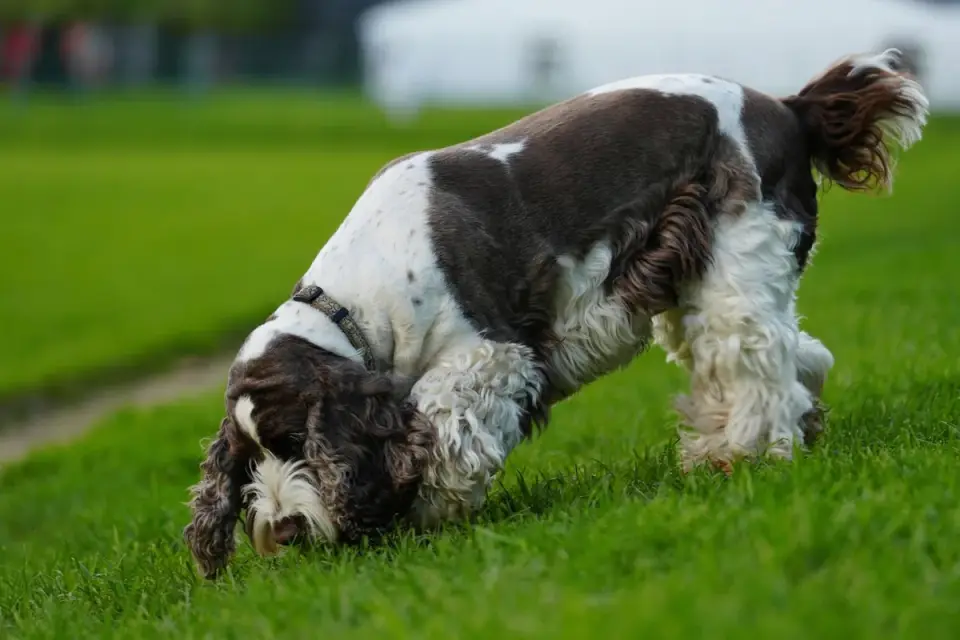
In my practice, the dogs who do best on a treadmill are usually the ones who need exercise standardized for a specific reason — post-surgical conditioning, a weight-loss plan where I want a known number of minutes at a known pace, or an anxious dog who does better with a predictable routine before graduating to the chaos of a neighborhood walk. I’ve watched an eleven-year-old Beagle with mild hip dysplasia do well on ten minutes of slow treadmill walking twice a day, working up gradually, specifically because the flat surface let her build muscle without asking her hips to negotiate a curb or a slope while she was still deconditioned. But I’ve also watched dogs plateau on a treadmill — physically fine, but flat in mood, less interested in food, pacing at the window — because the walk had stopped doing the job a walk is supposed to do for a dog’s brain: new scents, a change in weather, another dog crossing the street. For most healthy adult dogs, that outdoor variety isn’t optional texture. It’s part of the exercise.
Where each one actually belongs
Use a treadmill when: the vet or rehab team has prescribed controlled conditioning, weather genuinely prevents safe outdoor exercise, or an owner needs a predictable, measurable substitute on specific days. Use outdoor walking as the default for almost everyone else — it does more for joint stabilization through varied load, and it does more for behavior and mental health through novelty. If duration is the open question rather than terrain, our guide on how long a dog’s walk should be breaks that down by life stage and joint status. And because heat changes the calculus for outdoor walking in a way a treadmill sidesteps entirely, it’s worth checking when it’s too hot to walk a dog before assuming the sidewalk is always the safer default.
By the time Barley’s owner and I worked through his plan, we’d landed on a mix: outdoor walks most days, shortened and slower, with a treadmill session on the days ice made the yard steps too risky. Eight weeks later she told me he was taking the stairs again without hesitating at the top. I can’t call that a study result — it’s one dog, one owner, one winter — but it’s the pattern I see often enough to trust the framework behind it.
The verdict
A treadmill is a legitimate conditioning tool, not a walking replacement. Outdoor walking should stay the default for healthy dogs because of what varied terrain does for joints and what novelty does for behavior. Reach for the treadmill when control matters more than variety — rehab, bad weather, or a specific fitness goal — and lean on the outdoors the rest of the time. For dogs already showing joint stiffness, pair the right exercise surface with a vet conversation about supplements like chondroitin or glucosamine, understanding those ingredients support joint tissue rather than replace sound exercise choices. If you’re building a broader routine, our Whole-Dog Wellness starting guide is a reasonable place to begin.
Frequently asked questions
Is a treadmill bad for a dog's joints?
Not inherently — a flat, controlled belt can actually be gentler on a deconditioned or recovering dog than uneven outdoor terrain, which is why rehab programs use them. The concern is relying on it exclusively for a healthy dog, since it removes the varied loading that helps build joint stability.
Can a dog get enough exercise on a treadmill alone?
Physically, often yes for cardiovascular conditioning. Behaviorally, most dogs still need the scent exposure, novelty, and terrain variety of outdoor walks — a treadmill is best used as a supplement to outdoor time, not a full substitute for it.
Sources
- Chondroitin sulfate and synovial fluid homeostasis — Frontiers in Veterinary Science
- Glucosamine HCl and cartilage degradation — Journal of Veterinary Medical Science
- Green-lipped mussel compounds and inflammatory markers — Nutrients